
Productivity SaaS MeetX
Meetings that end in clear decisions
MeetX schedules meetings, runs the agenda, captures the minutes and tracks what everyone agreed to do — in one place. We designed version two against a hard launch date and a deliberately simple build.
- Client
- MeetX
- Sector
- Productivity SaaS
- Scope
- Research, UX, interface design
- Timeline
- 20 days design, 45 to launch
The challenge
We went looking for where meetings actually break, and the numbers were blunt. 71% of people said their meetings were unproductive. 65% said meetings kept them from completing their own work. 51% said meetings routinely overran. 45% said the wrong people were in the room.
Underneath that: separate tools for scheduling, minutes and to-dos, time lost tracking what had been decided, and no way to keep personal and professional calendars apart.
What we did
Version two had to launch in 45 days, which left 20 days for design, and it would be built by developers at an intermediate experience level.
That is a real constraint, not a footnote. We made the trade-offs explicitly and early — fewer features, simpler widgets, flows reusing the same patterns — because designing freely and discovering the cost during the build is how release dates get missed.
What the research found
- People are already deep in the Google and Microsoft ecosystems — replacing the calendar was never on the table.
- Different platforms for scheduling meetings, managing teams, minutes and to-dos.
- Time wasted tracking the minutes of a meeting after it ends.
- Coordination issues between team members reduce productivity.
- Difficulty categorising personal against professional meetings.
- Difficulty syncing and tracking the to-dos of different team members.

Prakash Bansal
Project manager · 7+ years · 34Runs several teams, schedules and sits in reviews, client calls and feedback sessions all day, and has to report progress upward.
OverbookedAccountableImpatient
Needs
- Minutes and team to-dos in one place
- Meetings that finish on time
- Progress reports he can hand to a project head
Pain points
- Cannot track progress of the work
- Meetings crowd out his own tasks
- Checking everyone's availability is itself a job
- Depends on several platforms to do one thing
Opportunities
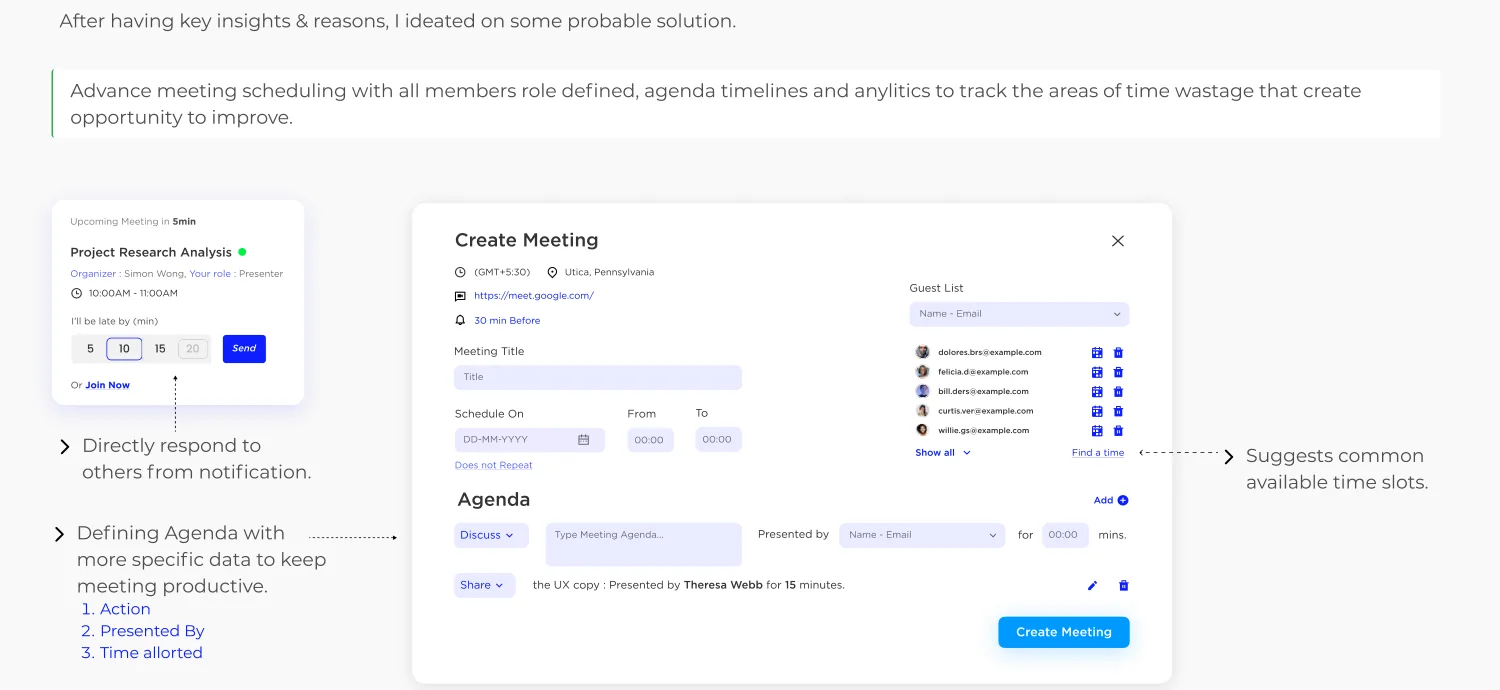
- Availability resolved before the invite goes out
- Minutes captured during the meeting, not after
- To-dos attached to the conversation they came from

Rajesh Singh
UX designer · 3+ years · 25Part-time employed, partly freelance, teaching on the side. Plans his day around deadlines and tries to finish everything before it ends.
JugglingSelf-managedForgetful
Needs
- Company, client and personal meetings kept apart
- Tasks prioritised against real deadlines
- Everything about a task in one place
Pain points
- Cannot separate the three kinds of meeting
- Hard to prioritise and remember deadlines
- Unproductive meetings eat his own work
- Forgets what was agreed in a call two days ago
Opportunities
- Categorised meetings and to-dos
- A record of the call attached to the task
- One view of what is actually due
The process we followed
A short, conventional process run properly. With twenty days of design time the discipline is not inventing a method — it is refusing to skip a stage of one that already works.
Research
Where meetings break, and for whom.
Define
Three problem clusters, ranked for the release.
Ideate
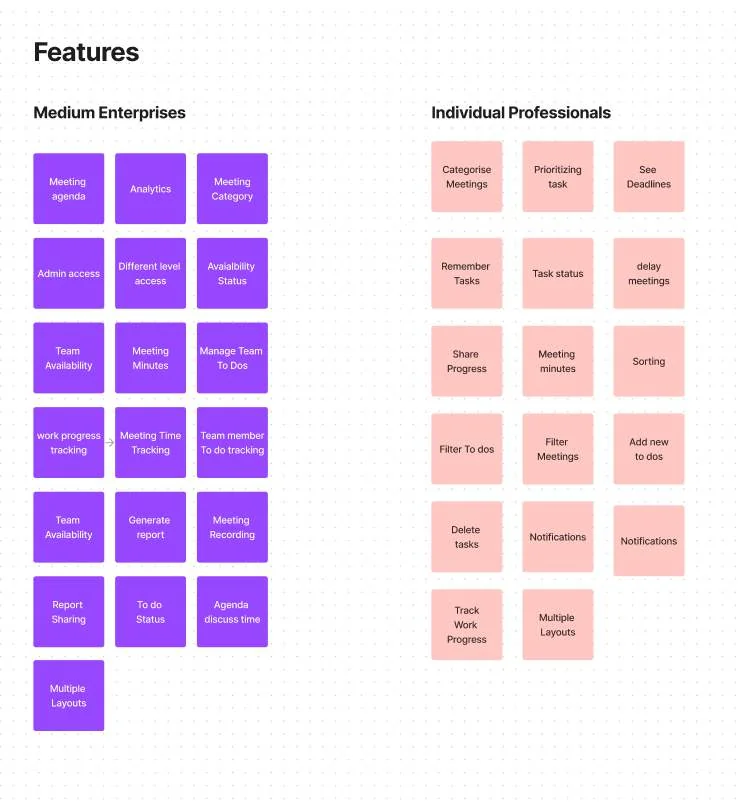
Feature sets split by audience, then cut to fit 20 days.
Prototype
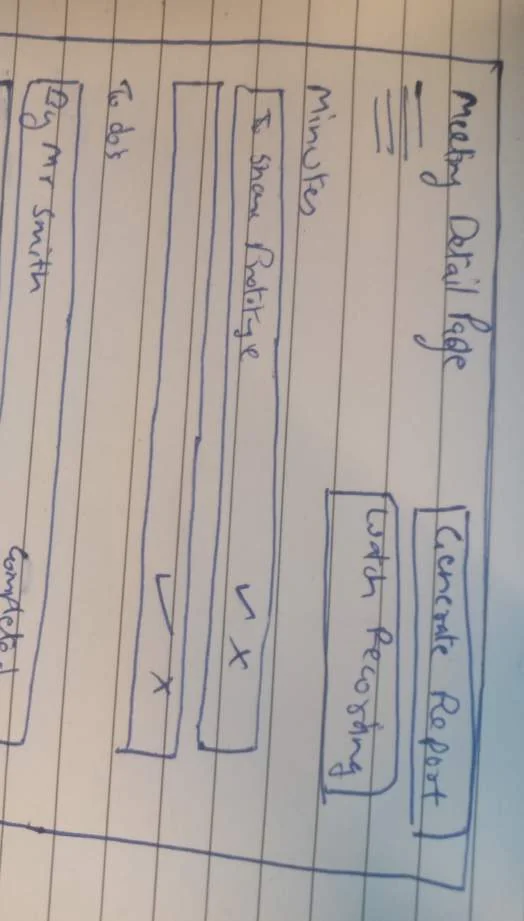
Paper first, then screens the team could build.
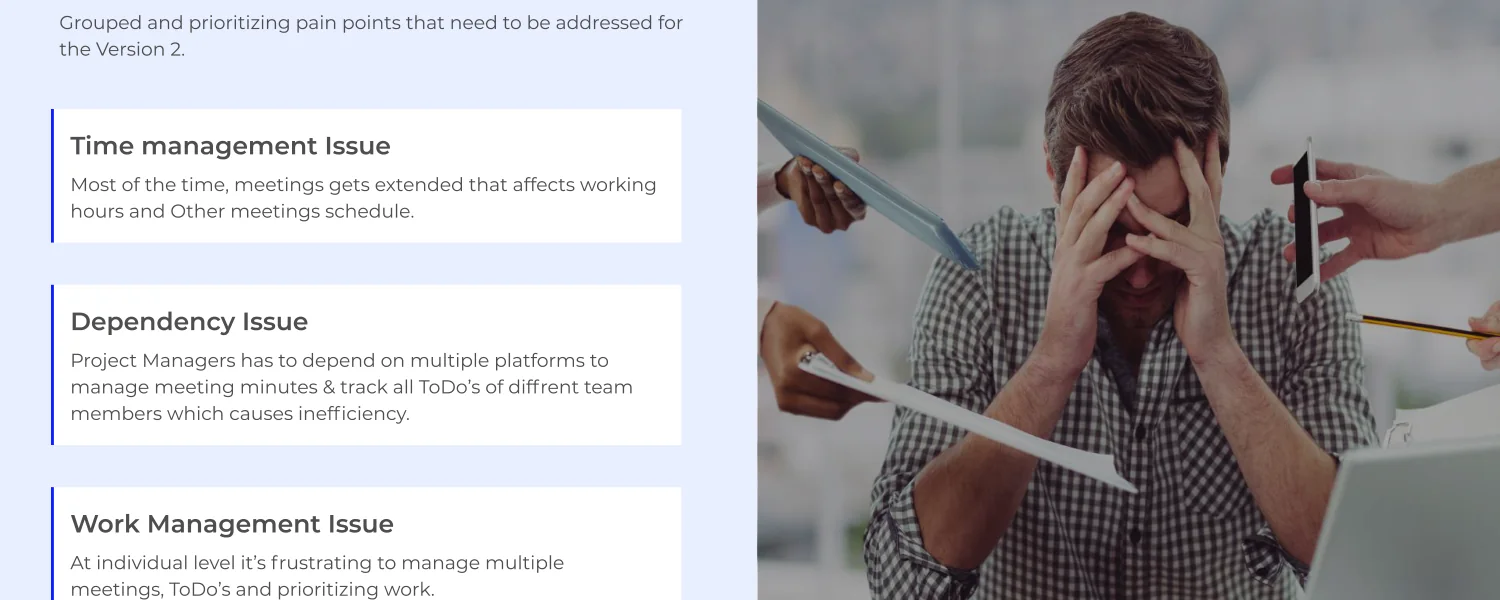
Three problems, ranked
Time management, dependency on multiple platforms, and work management at the individual level. Anything that did not serve one of those three waited for a later version — which is how twenty days of design time stays honest.
Scheduling that resolves availability first
Availability settled up front and an agenda attached before the call starts, so the meeting has a shape before anybody joins it.
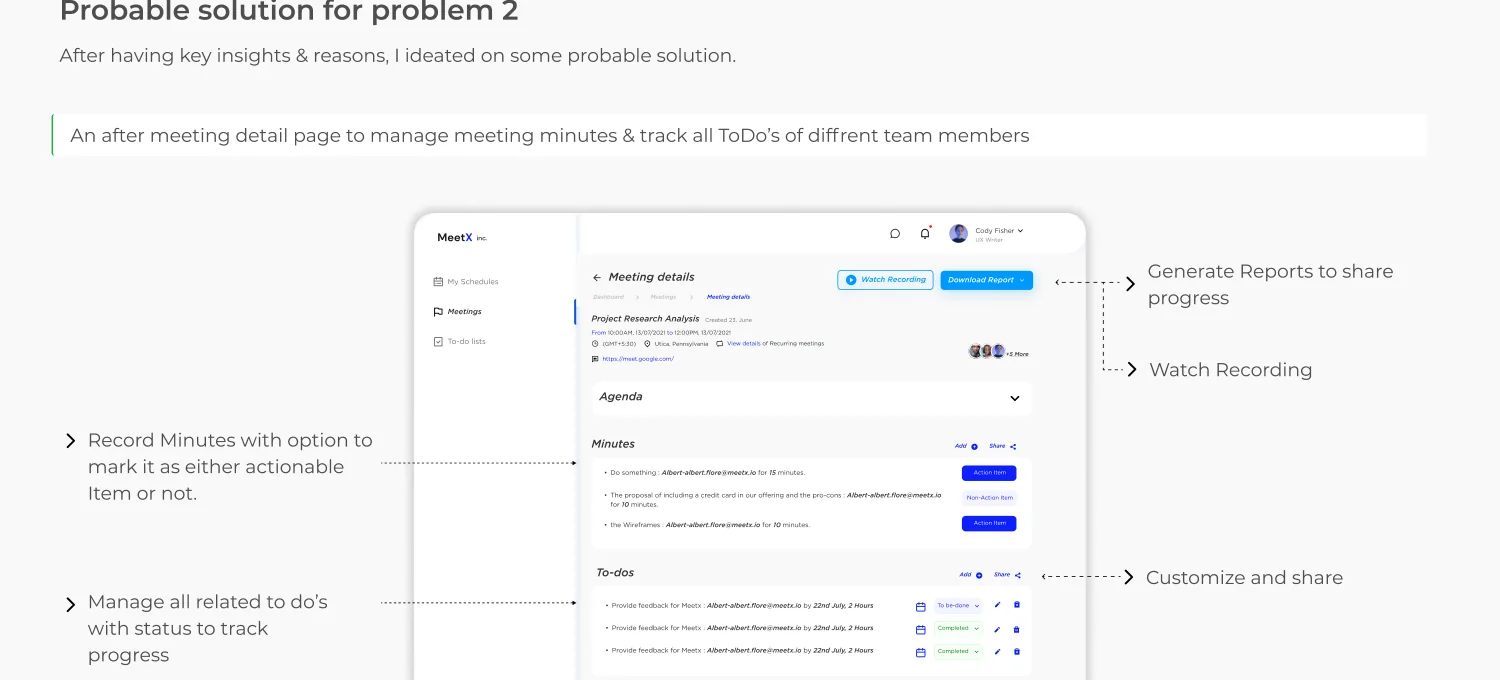
Minutes captured live
Written during the meeting and shared as a record rather than retyped afterwards from memory — removing the second platform the manager was depending on.
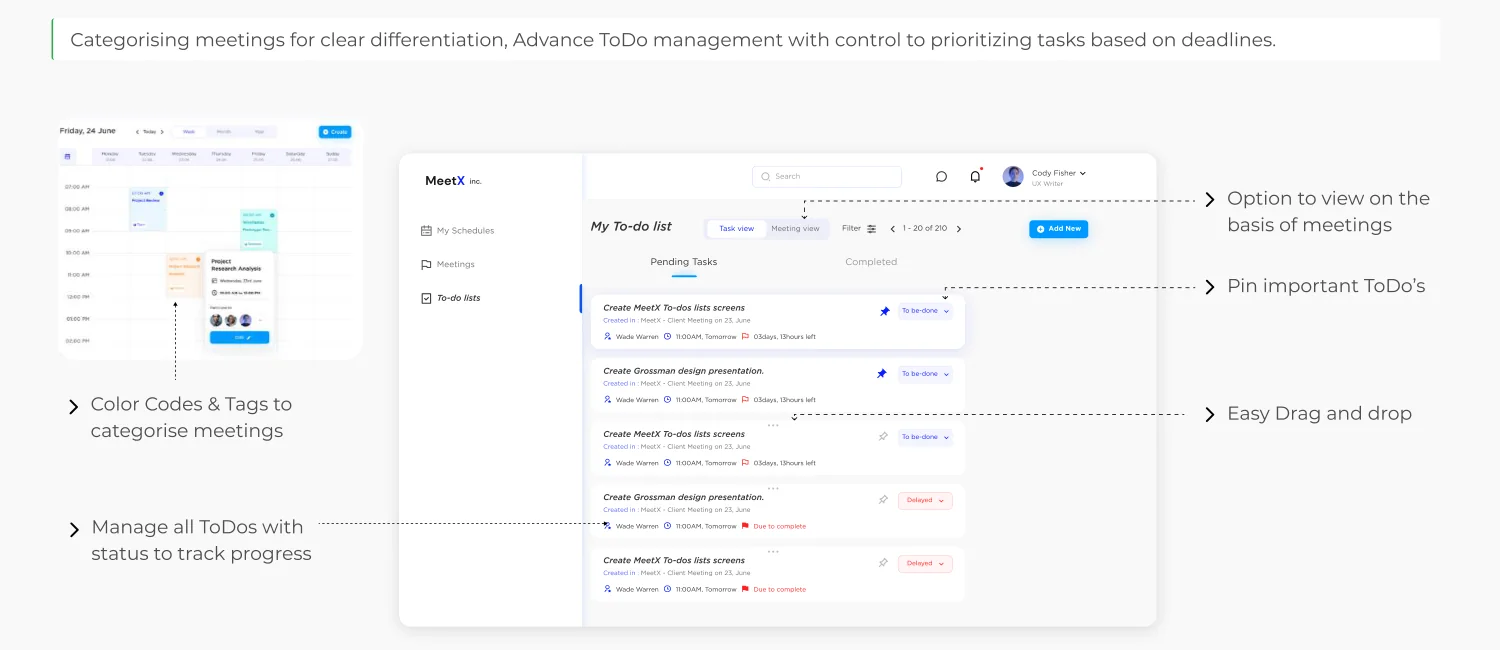
To-dos, attached to their origin
Extracted from the conversation they came out of, categorised, and tracked against a deadline — so the individual can finally see what they actually agreed to.
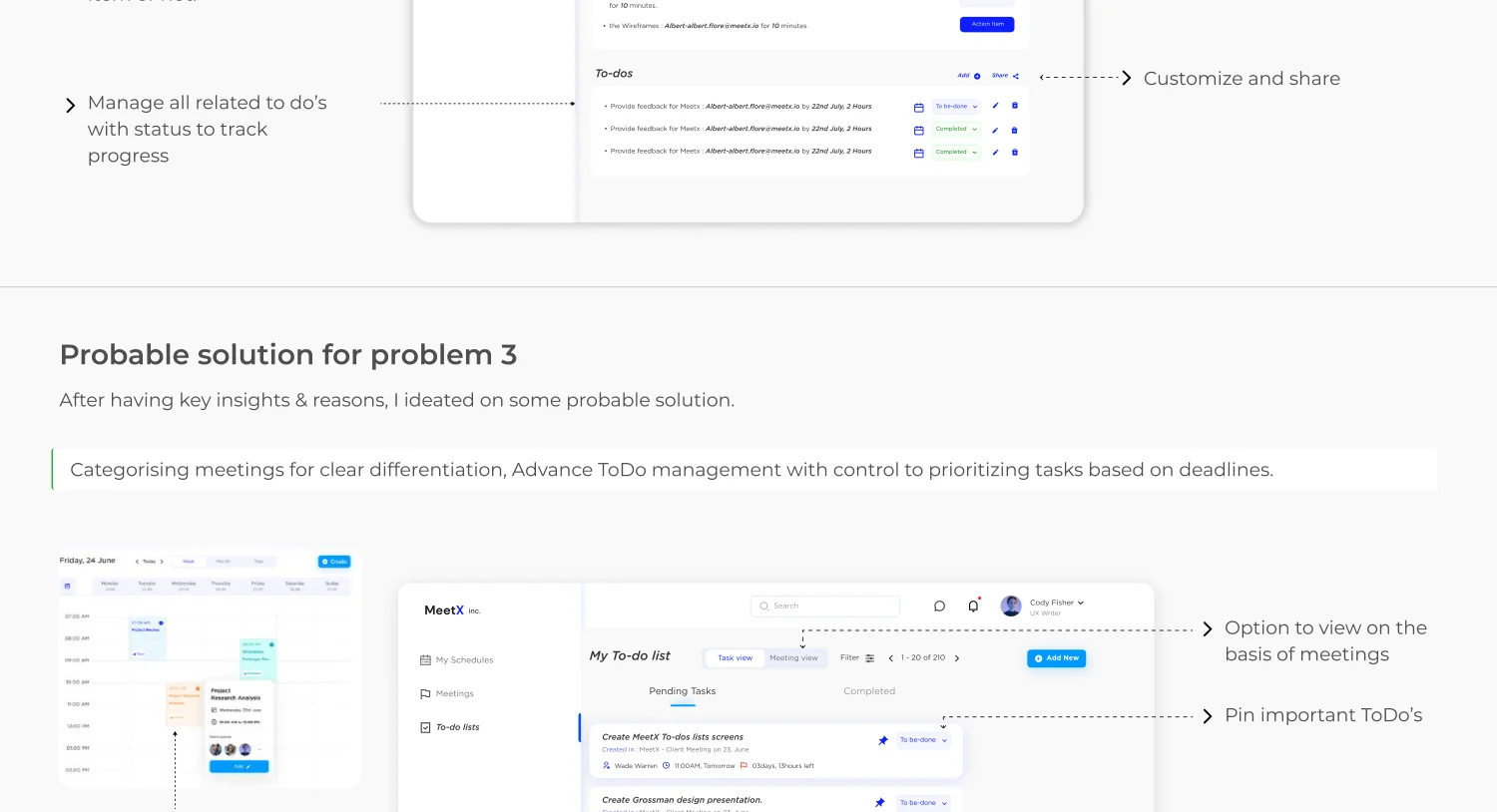
Annotated, so the build team could read it
Every solution screen shipped with its reasoning attached. On a 45-day release with intermediate developers, a design that needs explaining in a meeting is a design that will be built wrong.
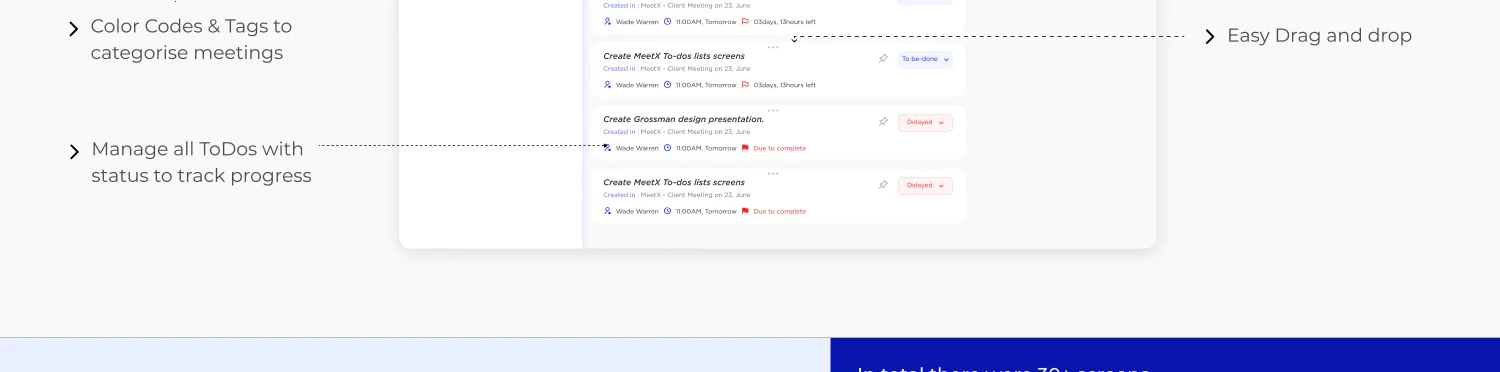
Colour codes and tags
The mechanism that solved Rajesh's problem — categorising meetings so company, client and personal stop blurring into one calendar, with the same tags carrying through to the to-dos they generate.
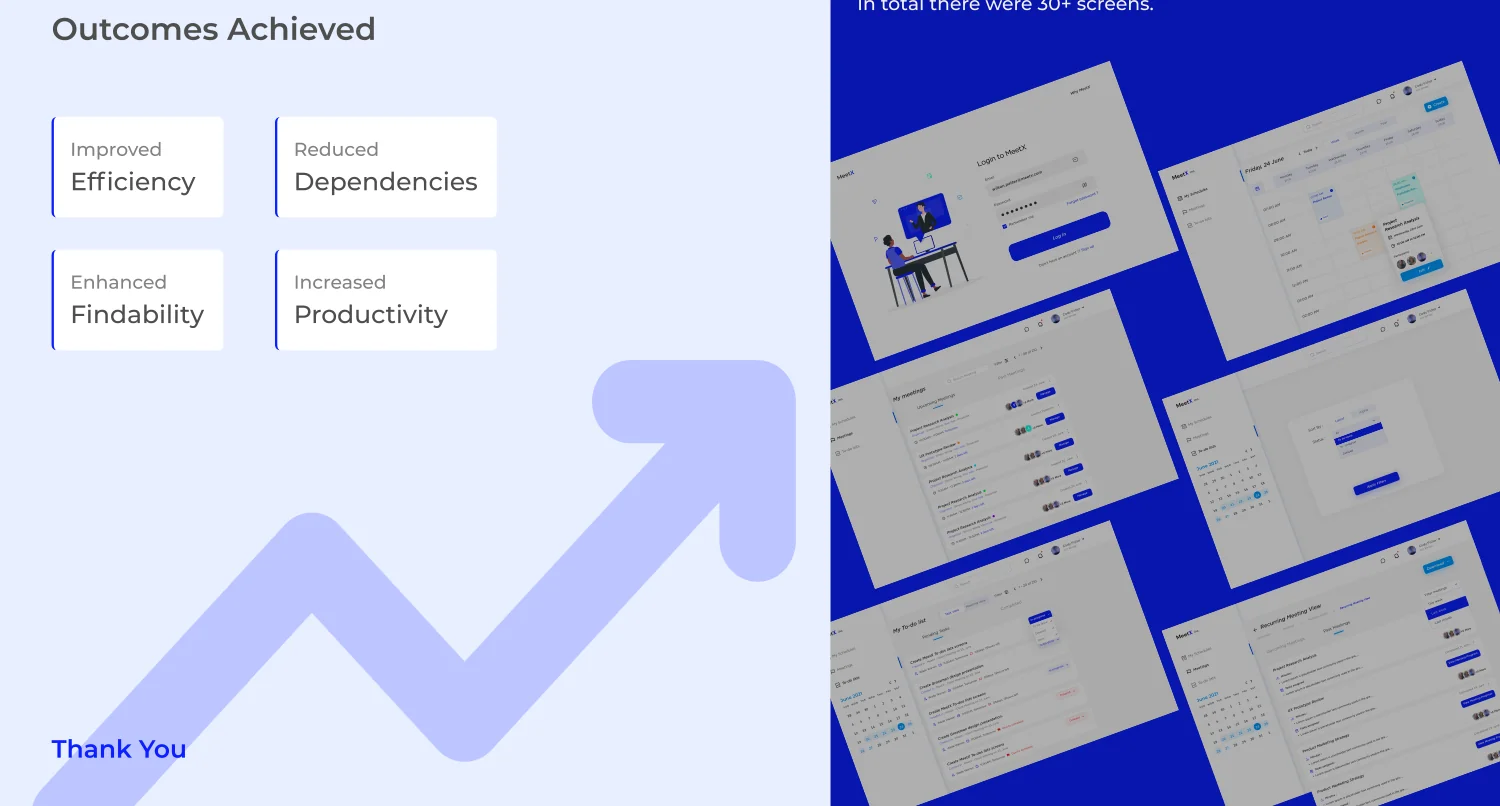
Thirty-plus screens in twenty days
Delivered against the five outcomes the team set at the start: improved efficiency, reduced dependency, better findability, improved productivity — and a product the existing developers could actually build.
Conclusion
Version two shipped on its date. The design fitted the team that had to build it, which on a 45-day release is not a compromise — it is the requirement.
Scheduling, agendas, minutes and to-dos now sit in one product, which was the point: the research said the tool-switching was the problem, not the meetings themselves.
What it added up to.
Got something that needs building properly?
Fifteen minutes is usually enough for us to tell you something useful about it.