
Sport · Live events FIFA
VIP guest management, against an immovable date
An international tournament brings dignitaries, sponsors and celebrities into one venue on one day, each with their own requirements. We designed the application the event team uses to keep that from going wrong.
- Client
- FIFA events
- Sector
- Sport & live events
- Scope
- Product design, operations tooling
- Surface
- Web & mobile app
The challenge
Managing VIP guests at a tournament is a logistics problem disguised as a hospitality problem. Requests arrive faster than they can be handled, staff need updating in real time, and preferences change on the day.
Do it badly in front of a dignitary and there is no second attempt — the match ends and the moment is gone. The existing process ran on radios, printed lists and whoever remembered how it went last year.
What we did
We designed for two roles with opposite needs. The coordinator needs the overview; the steward on the ground needs the next action. Building one interface for both would have failed both.
Everything is scoped to a single event after sign-in, because a tournament is not one event — it is dozens running in parallel across venues.

Faye Anderson
Event coordinator · 10+ years · 35Responsible for the smooth execution of the tournament for every VIP guest, across venues, on days when nothing can be rescheduled.
AccountableStretchedDecisive
Needs
- Smooth execution for every VIP guest
- Fewer manual steps in handling requests
- Real-time communication with staff
- Resource allocation that anticipates demand
Pain points
- Handling VIP requests by hand eats the day
- No reliable tool for updating staff live
- Too many responsibilities at peak periods
- Guest requirements change without warning
- No data to make decisions from
Opportunities
- One dashboard replacing radio, paper and memory
- Guests placed on a venue map so staff go where demand will be
- Satisfaction visible while there is still time to fix it
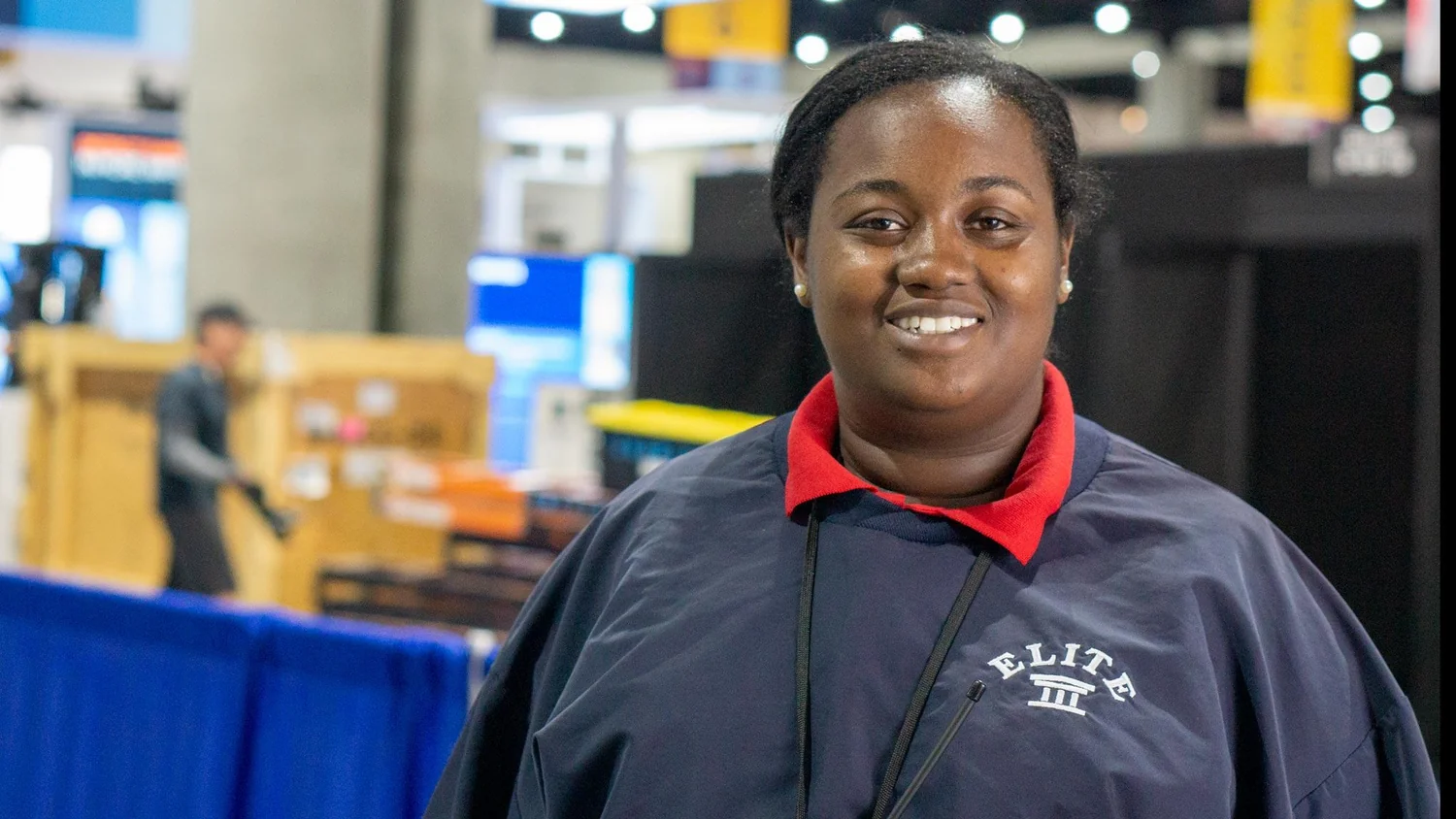
Event staff
Ground team · stewards and hostsDelivering the service in person, responding to the guest in front of them, and adapting the moment the plan changes.
On their feetReactiveUnder-briefed
Needs
- Clear instructions they can act on
- Guest needs addressed promptly
- To adapt quickly when circumstances change
- Support when a request escalates
Pain points
- Unclear communication from coordinators
- Limited resources for resolving a guest issue
- Long hours through the event period
- Systems that slow the task rather than speeding it
Opportunities
- The same data, filtered to their guests only
- Updates pushed rather than asked for
- A short path from problem to the person who can fix it
Guest management, end to end
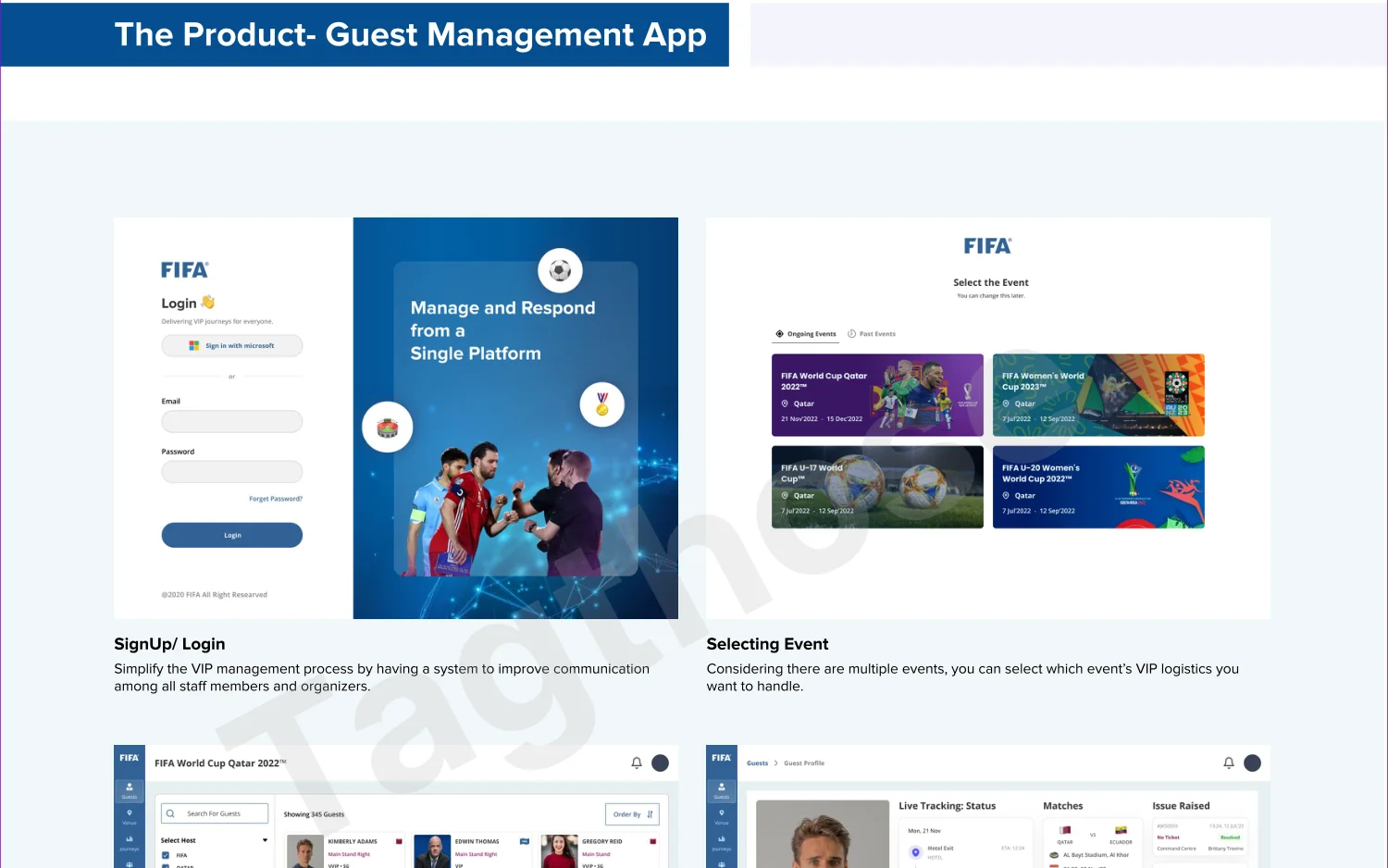
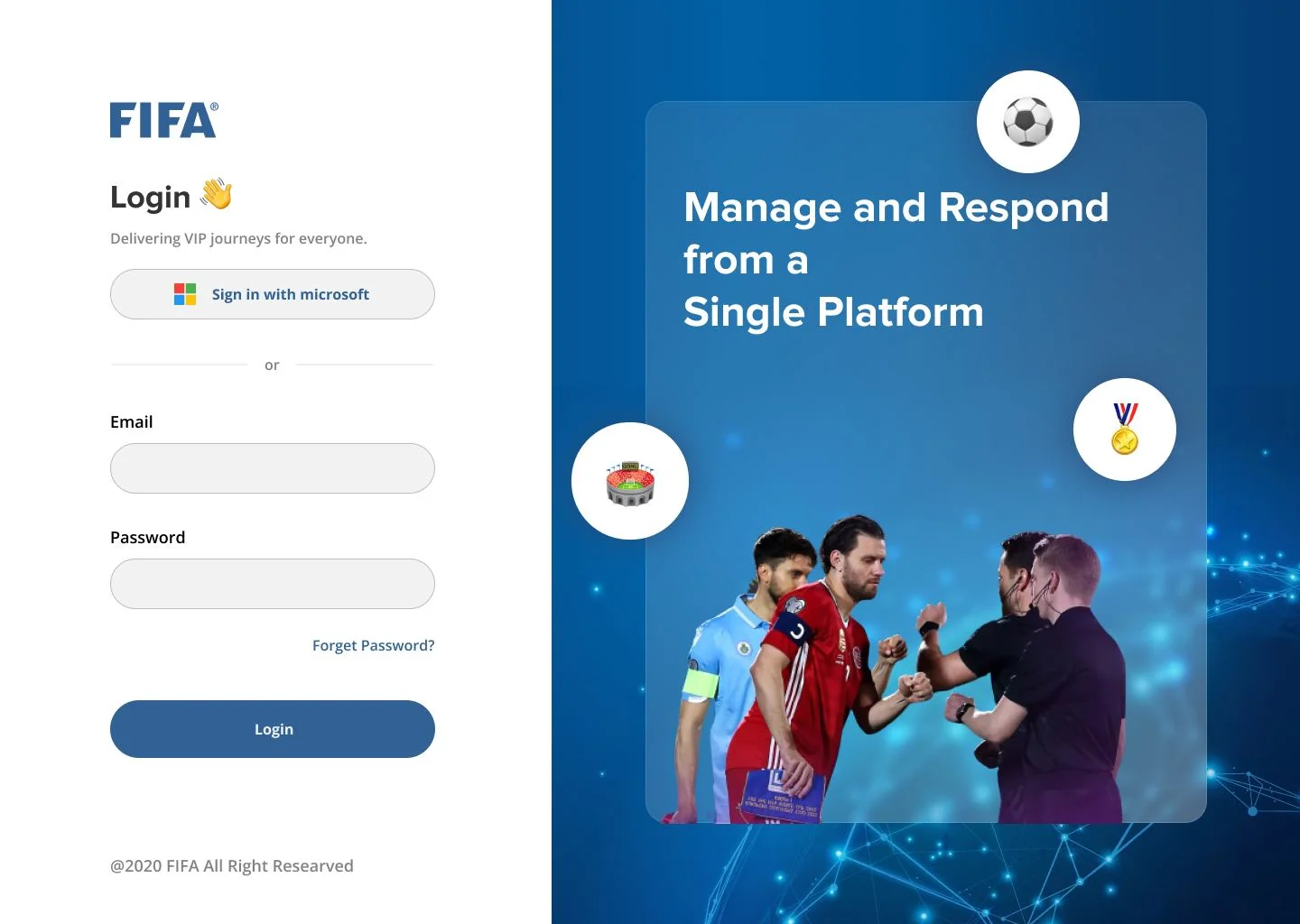
Sign-up and login, event selection, the VIP dashboard, individual guest profiles, arrival insights and a location view — the six surfaces the operation runs on, scoped so each role only meets the ones they need.
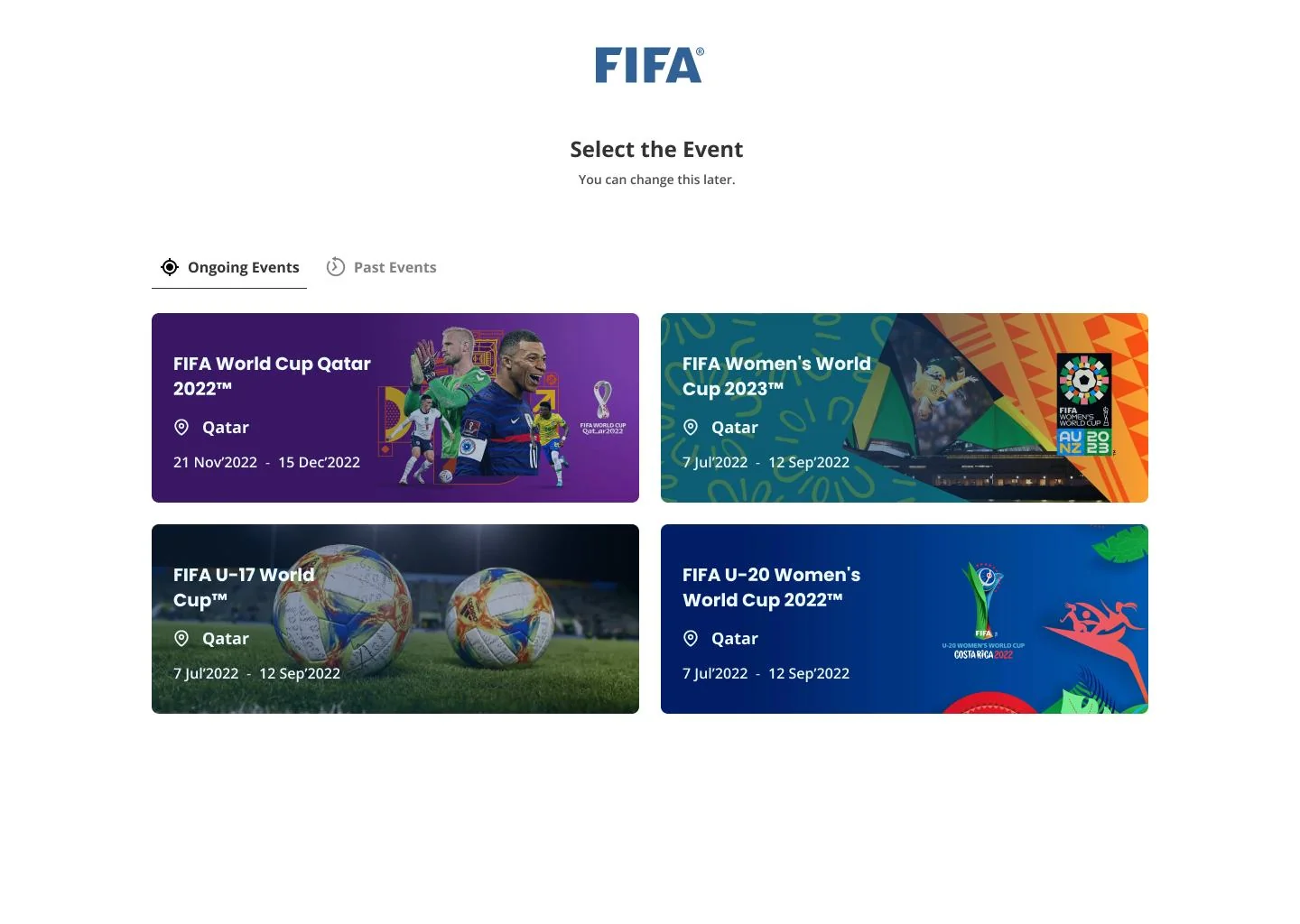
The operations dashboard
Status, location, attendance and emergencies at a glance, with live tracking one side and issues raised the other. The design question was not what to show but what to leave out — on a match day, anything unactionable competes with something that is.
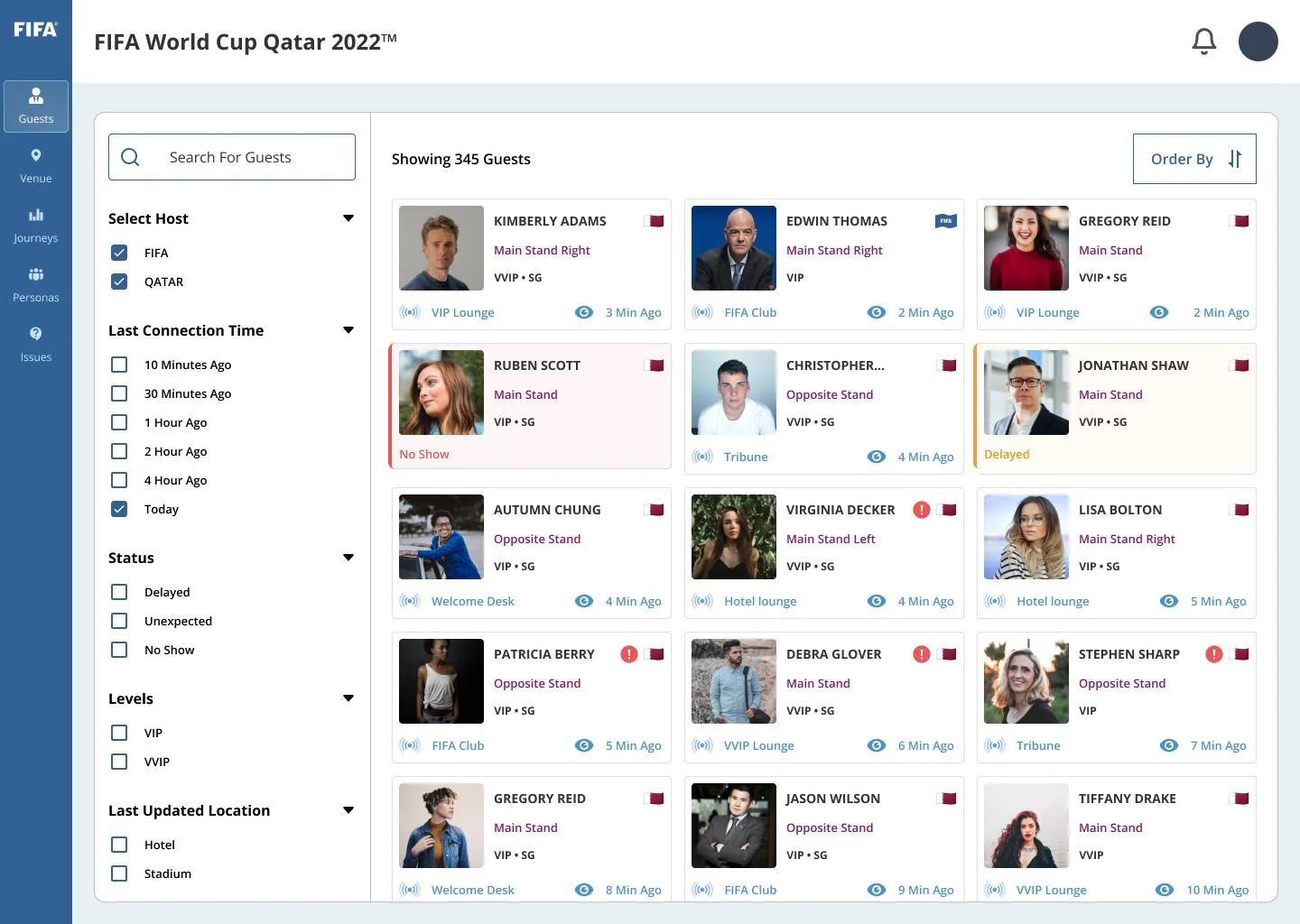
Guests, listed and filtered
Arrivals managed as journeys, so expected and unexpected guests get handled differently rather than identically.
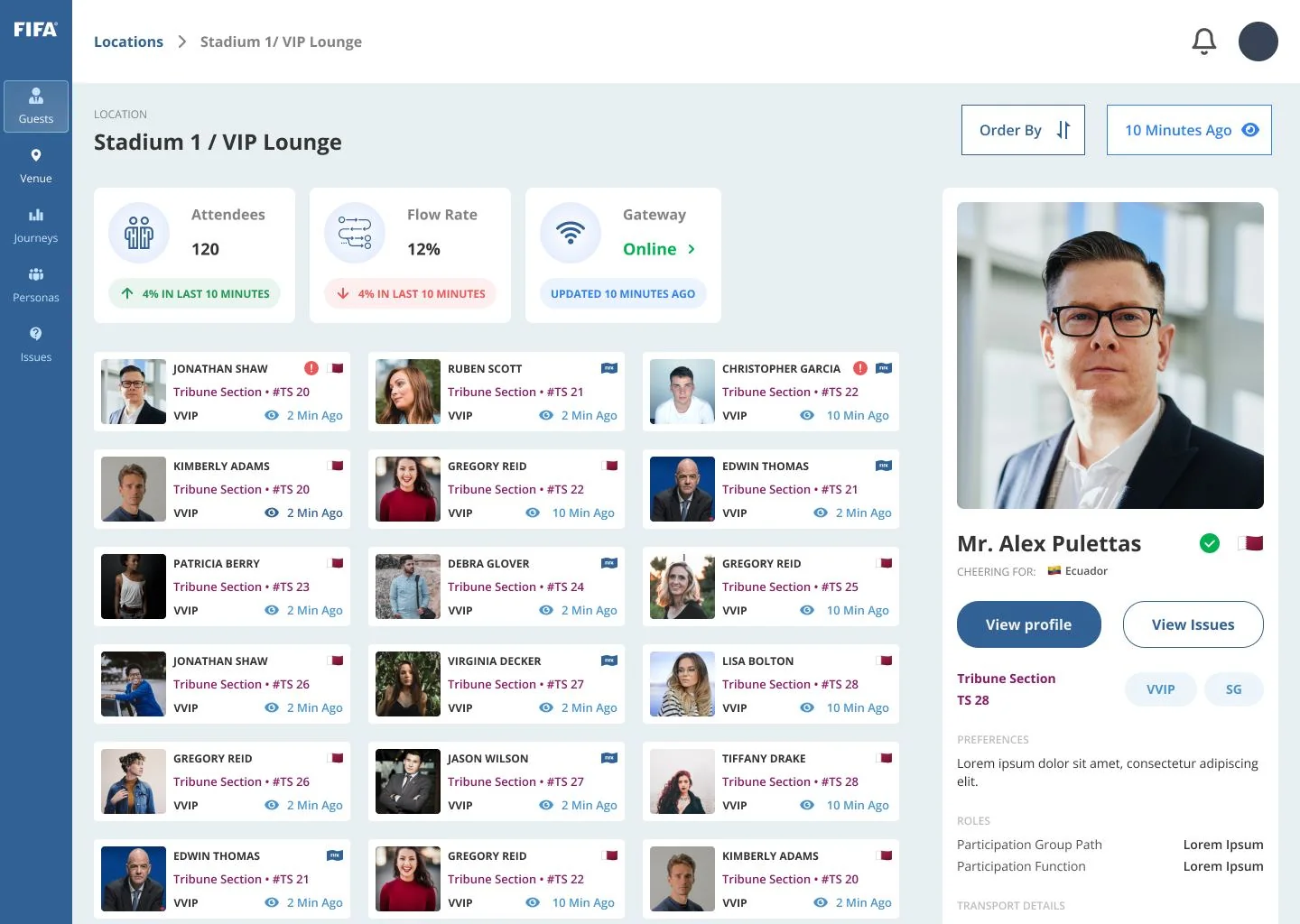
One guest, everything about them
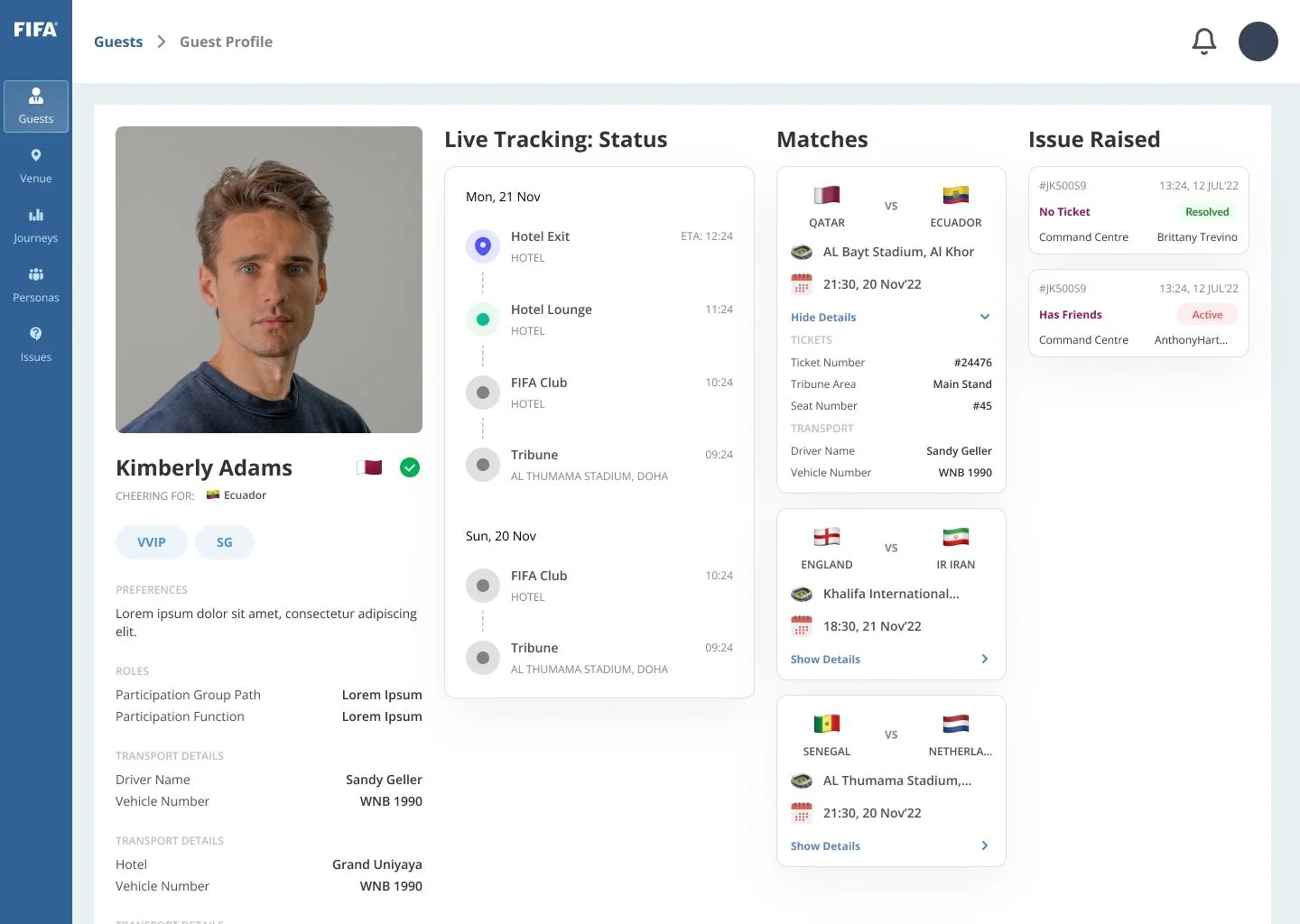
Location history, which match they are attending now and next, and any complaint raised previously or today — so the person standing in front of them does not have to ask twice.
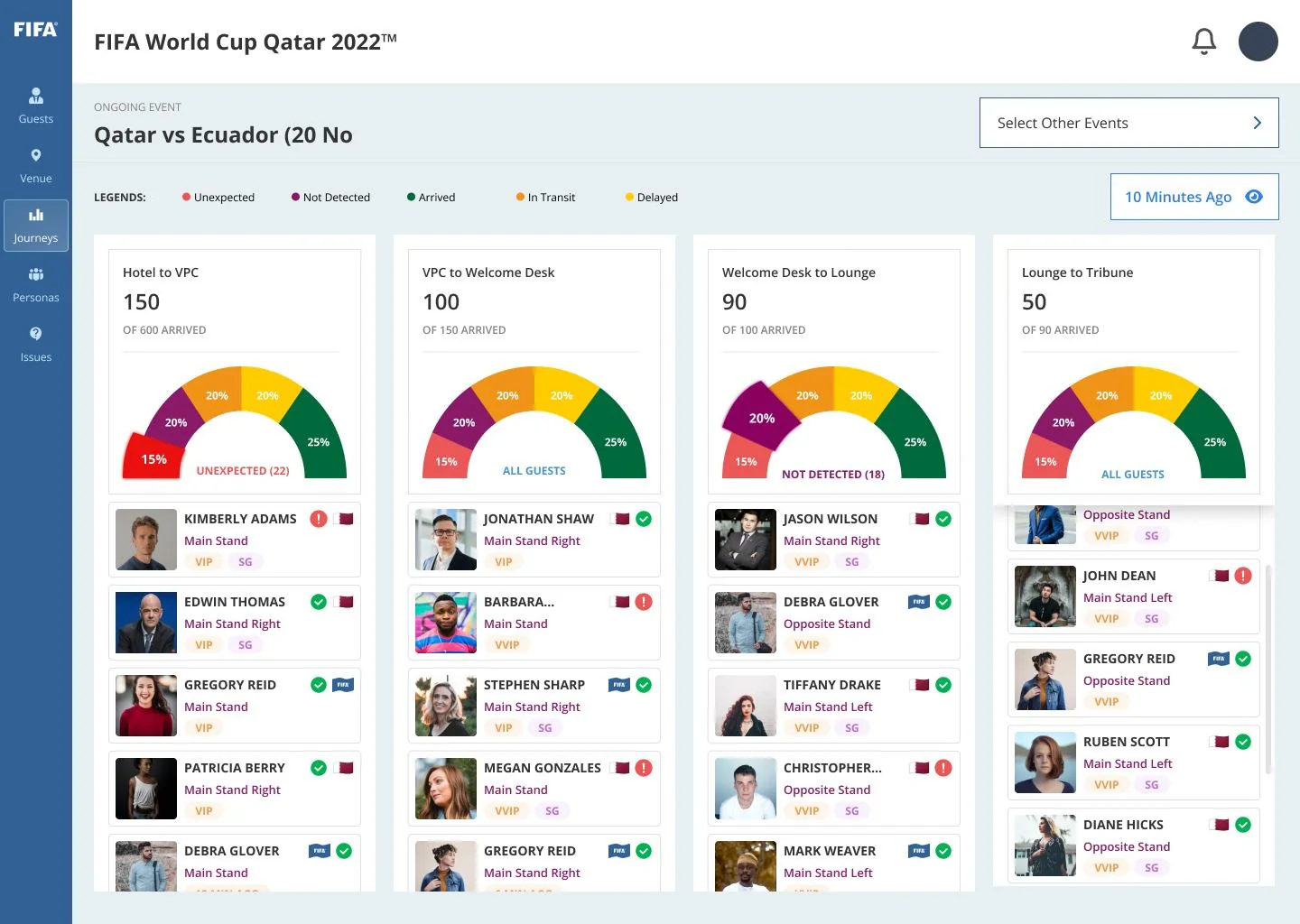
Reading the room, live
Satisfaction tracked per guest group through the day, so a problem shows up as a falling gauge while there is still time to send someone — rather than as a complaint in a post-event report.
Conclusion
Two roles, one system, and a dashboard that replaced radios and printed lists on the day that cannot be repeated.
The decision that shaped the product was refusing to build one interface for both users. An overview and a next action are different jobs, and a tool that tries to be both is useful to neither when the pressure arrives.
What it added up to.
Got something that needs building properly?
Fifteen minutes is usually enough for us to tell you something useful about it.