SaaS · Talent Weteams
Where companies and expert teams come together
Weteams set out to close the gap between companies that need software built and the specialist teams who can build it — with onboarding, collaboration and payouts on one platform instead of five.
- Client
- Weteams
- Sector
- Talent marketplace SaaS
- Scope
- Research, product design, UI
- Surface
- Web platform
The challenge
Talent and companies were not failing to find each other for lack of people. They were failing because finding, trusting, coordinating and paying a team was spread across job boards, chat apps, spreadsheets and bank transfers.
The stakeholders wanted one place where assembled teams could deliver end-to-end product work — which meant designing a marketplace that had to feel equally considered from both sides.
What we did
Research, define, ideate, prototype — with the flows for both sides mapped before any interface was drawn. On a two-sided product the structure is the hard part: every screen one user sees implies a screen the other one needs.
Three pillars carried it: a vetted expert pool, integrated messaging, and payouts consolidated to a single invoice.

Nina Mehta
Expert talent · 5+ years · 26A specialist five years in, looking for work worth doing and a way to prove she can be trusted by someone who has never met her.
AmbitiousTime-poorSceptical
Needs
- Challenging projects that match her skills
- A network of collaborators and clients
- Portfolio and reputation she can carry forward
- Steady income without constant pitching
Pain points
- Poor visibility — hard to be found at all
- Opportunities scattered across platforms
- No dedicated place to build a network
- Verifying a collaborator's reputation is guesswork
- Heavy competition for the desirable work
Opportunities
- A vetted pool where being good is enough to be found
- Trust signals carried by the platform, not the individual
- One place where the brief, the work and the payment live

Piyush Raj
IT company manager · 20+ years · 40Runs delivery at an IT company and needs a specific skill for a specific phase, now, without a six-week hiring cycle.
PragmaticDeadline-drivenRisk-averse
Needs
- Specific skills available at specific project phases
- Teams that stay for the length of the project
- Resourcing that matches the actual requirement
- One predictable invoice
Pain points
- Skill shortages exactly when they bite
- Retention problems mid-project
- Resource allocation that never quite fits
- Communication gaps that quietly cost weeks
Opportunities
- Scaling up as a selection problem, not a search problem
- Collaboration held beside the contract and deliverable
- Financial admin removed from multi-team work
The product
Weteams simplifies the digital product journey from idea to delivery, by onboarding experts and handling team management and payouts.
Experts & teams
Tap into an expert pool for software innovation and scaling. Specialised teams cater to your industry, providing a competitive advantage.
Payouts
Centralise payments for all your teams with one invoice. Individual payouts are managed through Weteams for seamless financial handling.
Messaging
Integrated messaging streamlines team collaboration, keeps everyone updated and delivers immediate support, all within a centralised platform.
The UX action plan
After working through the problem statement with the stakeholders, we agreed this process so the product could be built on real-time insight rather than on assumptions about either side of the marketplace.
Research
Both sides of the market, their frustrations and their goals.
Ideate
Feature sets that serve the expert and the company at once.
Define
Flows, permissions and handoffs settled as structure.
Prototype
Screens tested against the real journey before build.
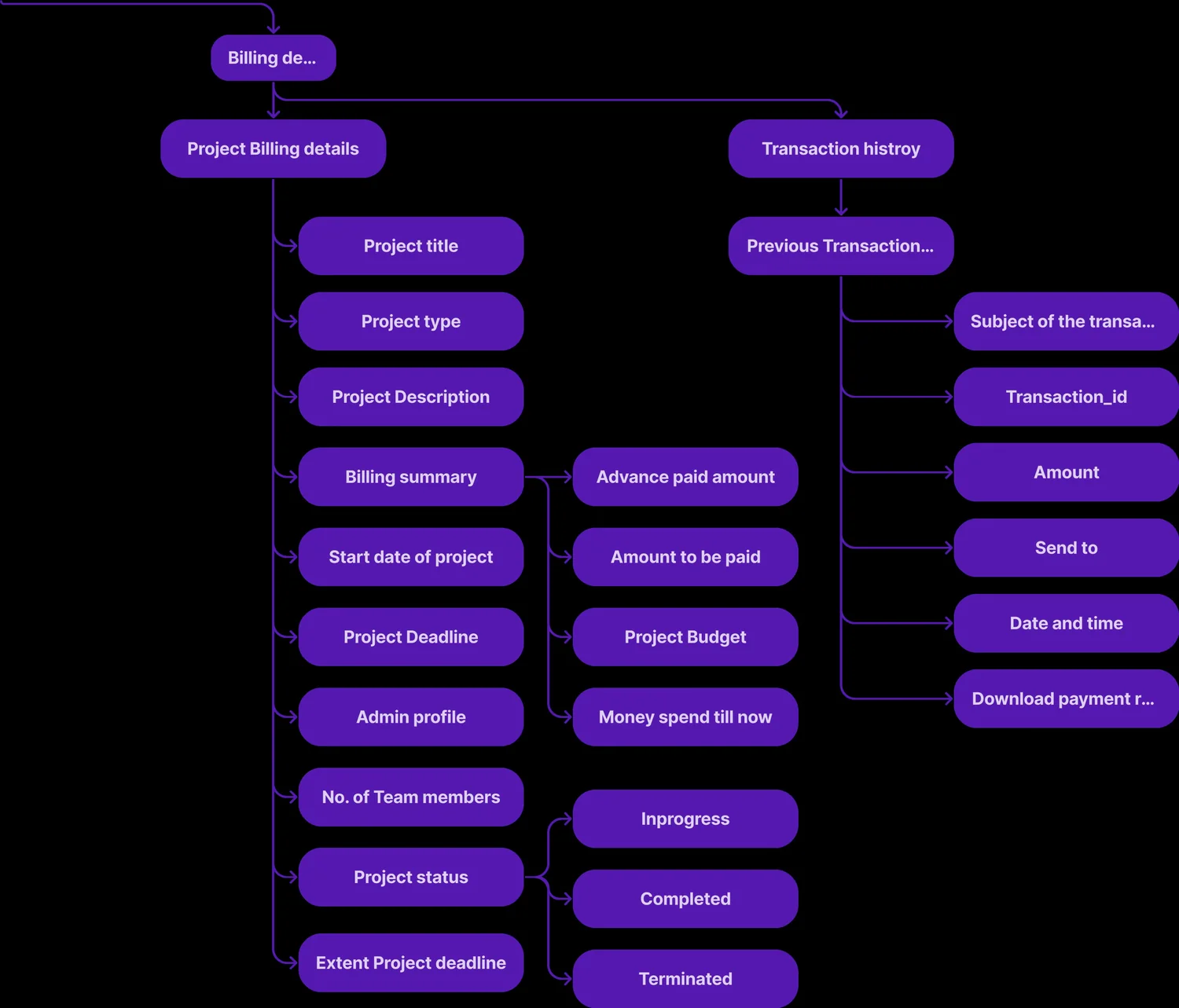
Both sides, mapped before drawing
Every flow for the expert and for the company, traced end to end — so the permissions, handoffs and empty states were settled as structure rather than patched in later.
Understanding success metrics
Written down before launch, so the platform could be assessed rather than admired.
- User engagement
- Measure interaction frequency and time spent on the platform.
- Satisfaction
- Gather user feedback on usability and features.
- Active users
- Track growth of both talent and companies.
- Projects posted
- Monitor the volume of posted projects.
- Collaborations
- Measure initiated partnerships between talent and companies.
- Project success
- Track timely delivery and client satisfaction.
- Time to match
- Assess speed of connecting talent with companies.
- Revenue
- Monitor income generated through subscriptions and commissions.
- Retention
- Evaluate user loyalty and ongoing value.
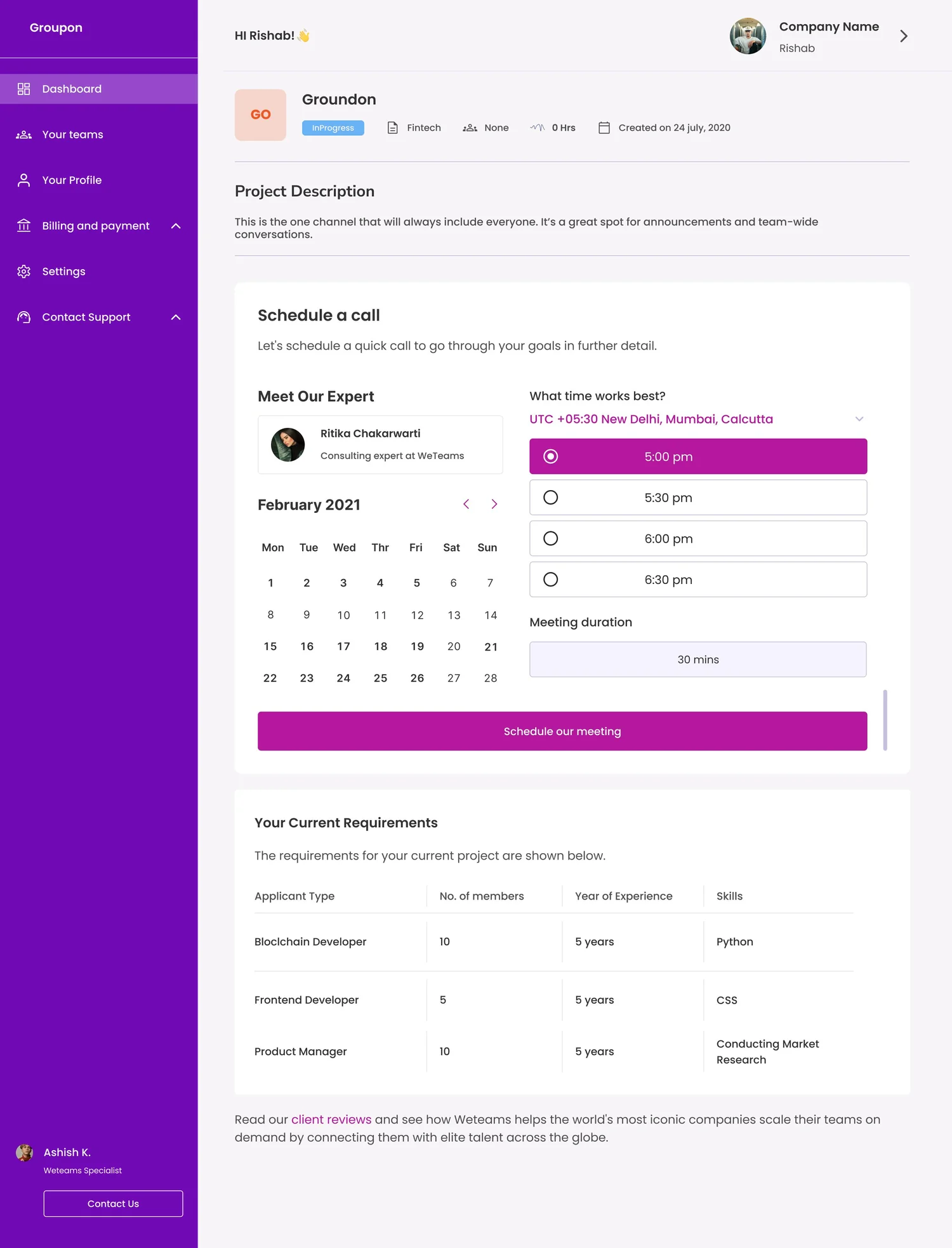
State the need, see the people
The hiring path had to collapse weeks of back-and-forth into something a manager could finish between meetings: post the requirement, review matched experts, book a call.
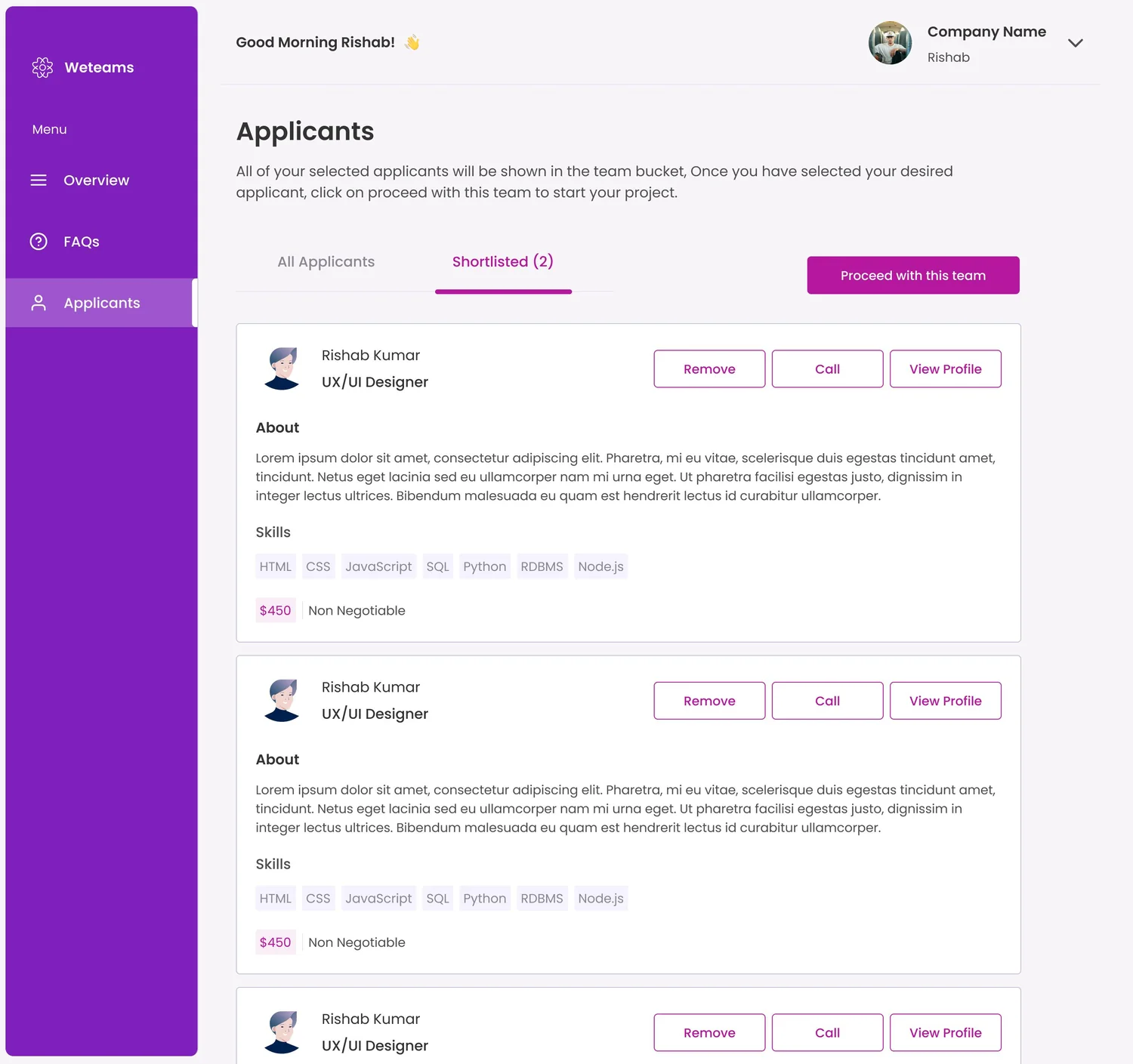
Applicants, shortlisted in place
Candidates reviewed and advanced inside the project rather than in somebody's inbox, so the decision trail survives the person who made it.
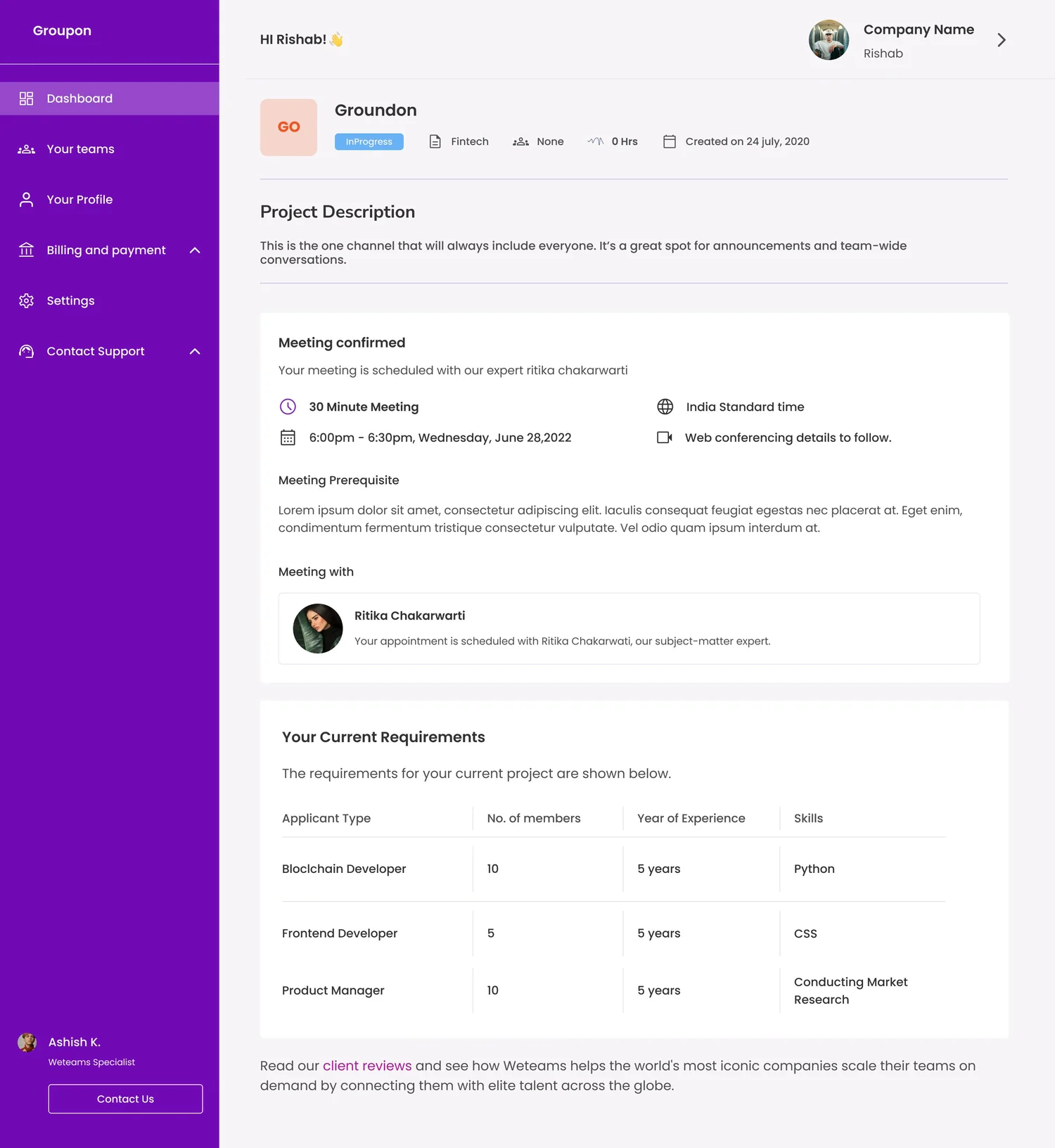
The brief lives with the project
Requirements, scope and the conversation about them held against the project record — the single most common thing to lose when work moves to email.
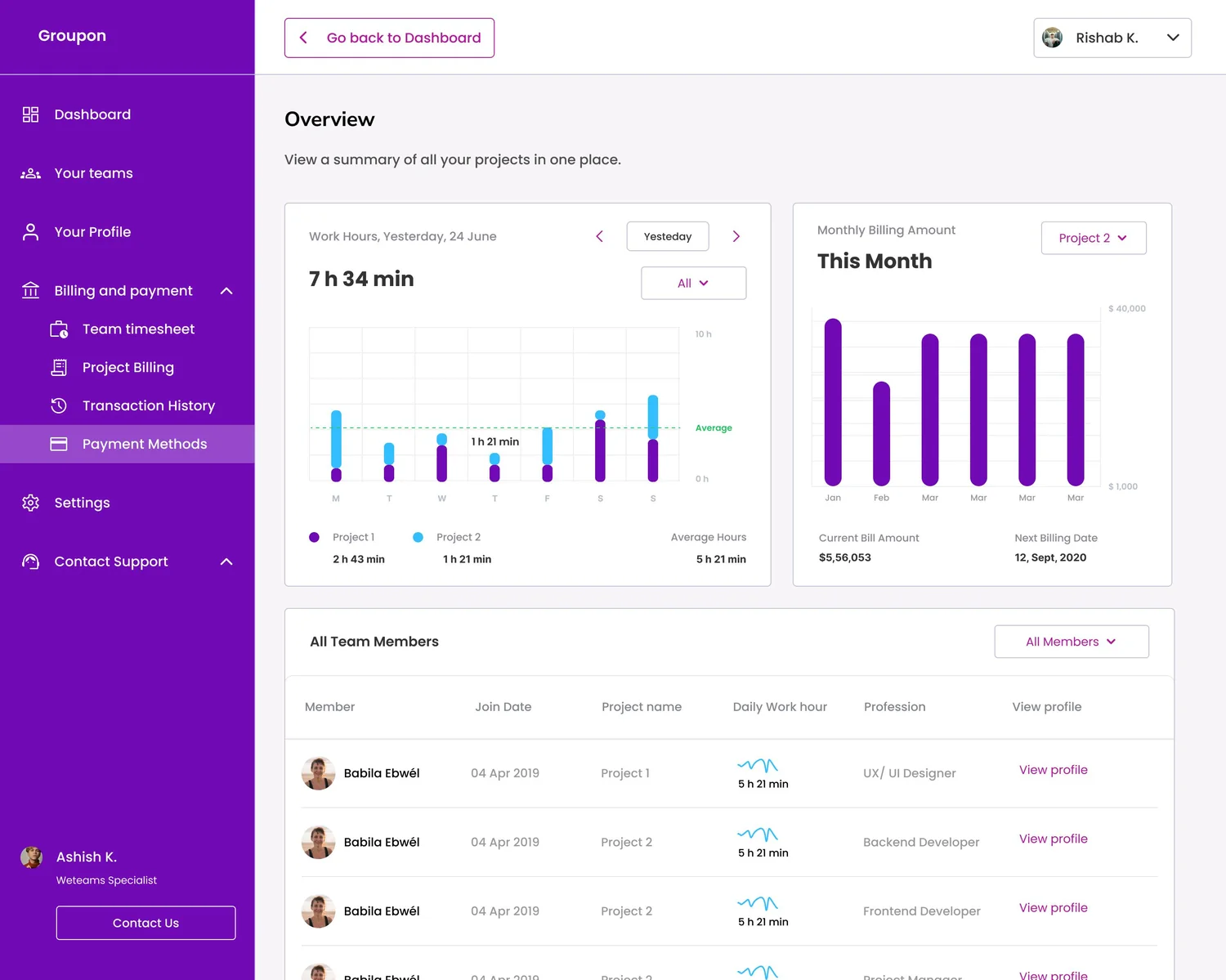
The overview
Utilisation and spend at a glance, for the person who has to answer for both.
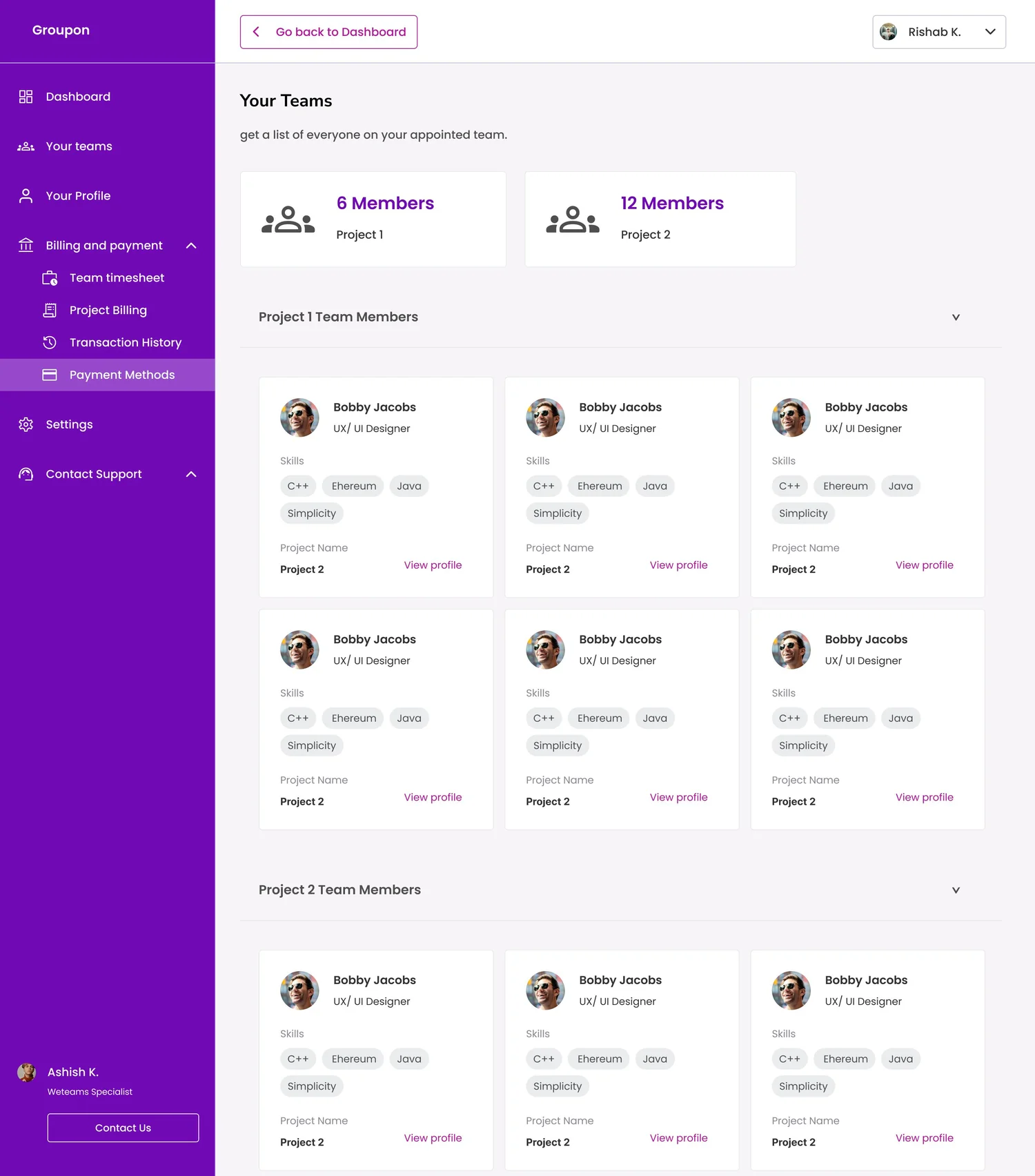
Teams, across projects
Who is on what, and for how long. Obvious until you try to answer it from three spreadsheets.
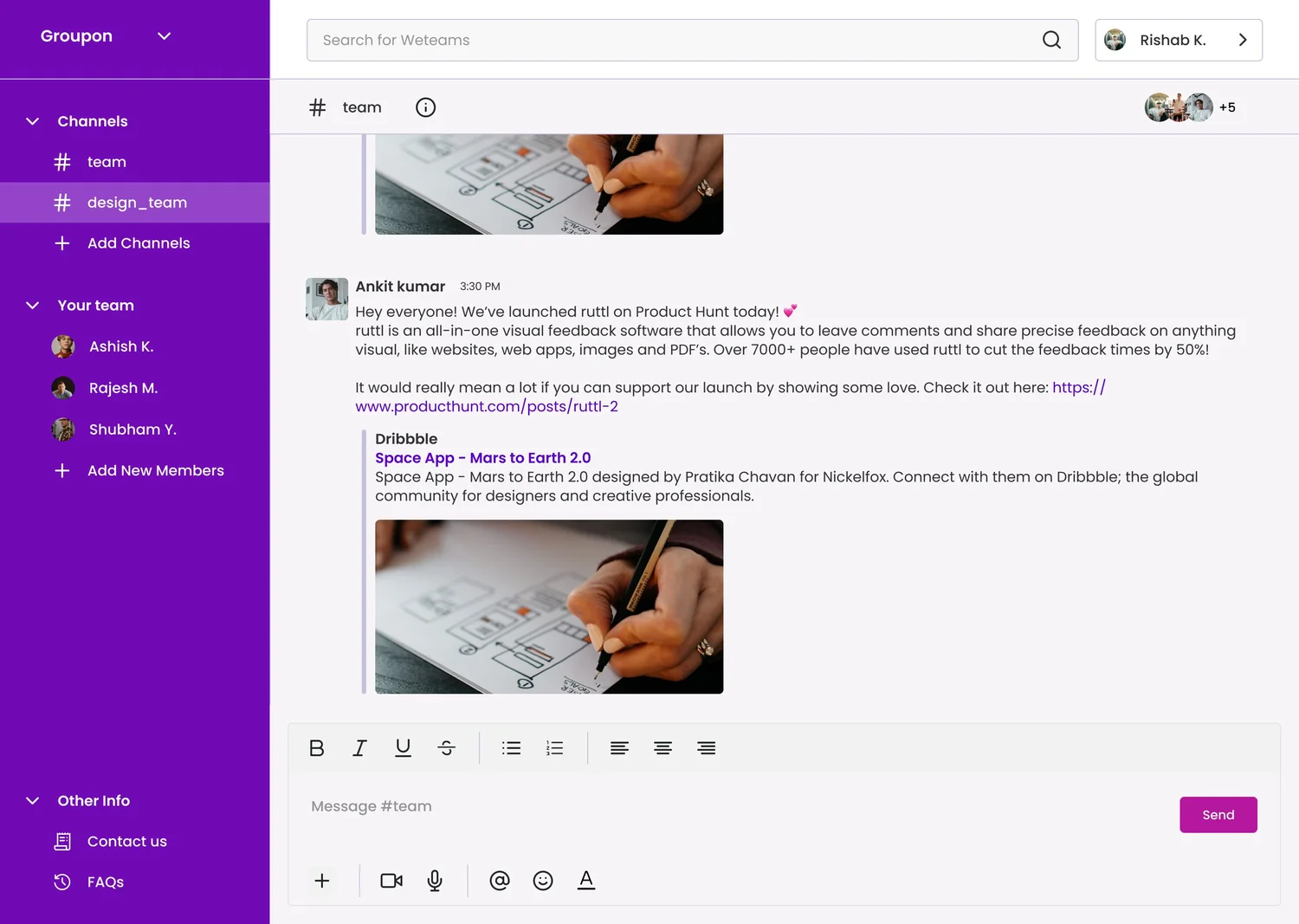
Messaging, in context
Integrated messaging keeps collaboration beside the contract and the deliverable, so context does not leak into private channels and vanish when someone leaves.
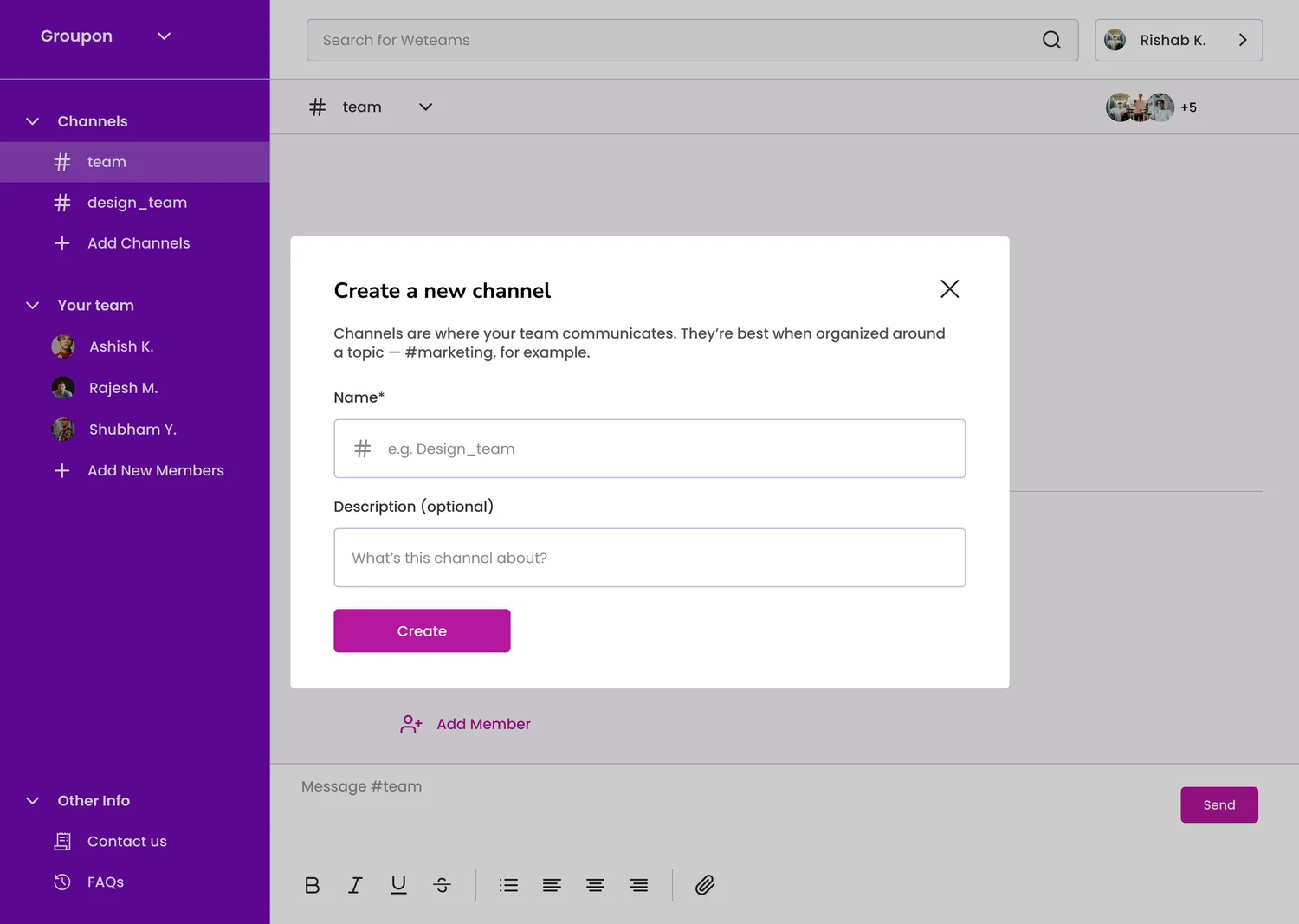
Channels, created where they belong
A channel opens against a project, not in a vacuum — which is the difference between a workspace and another chat app.
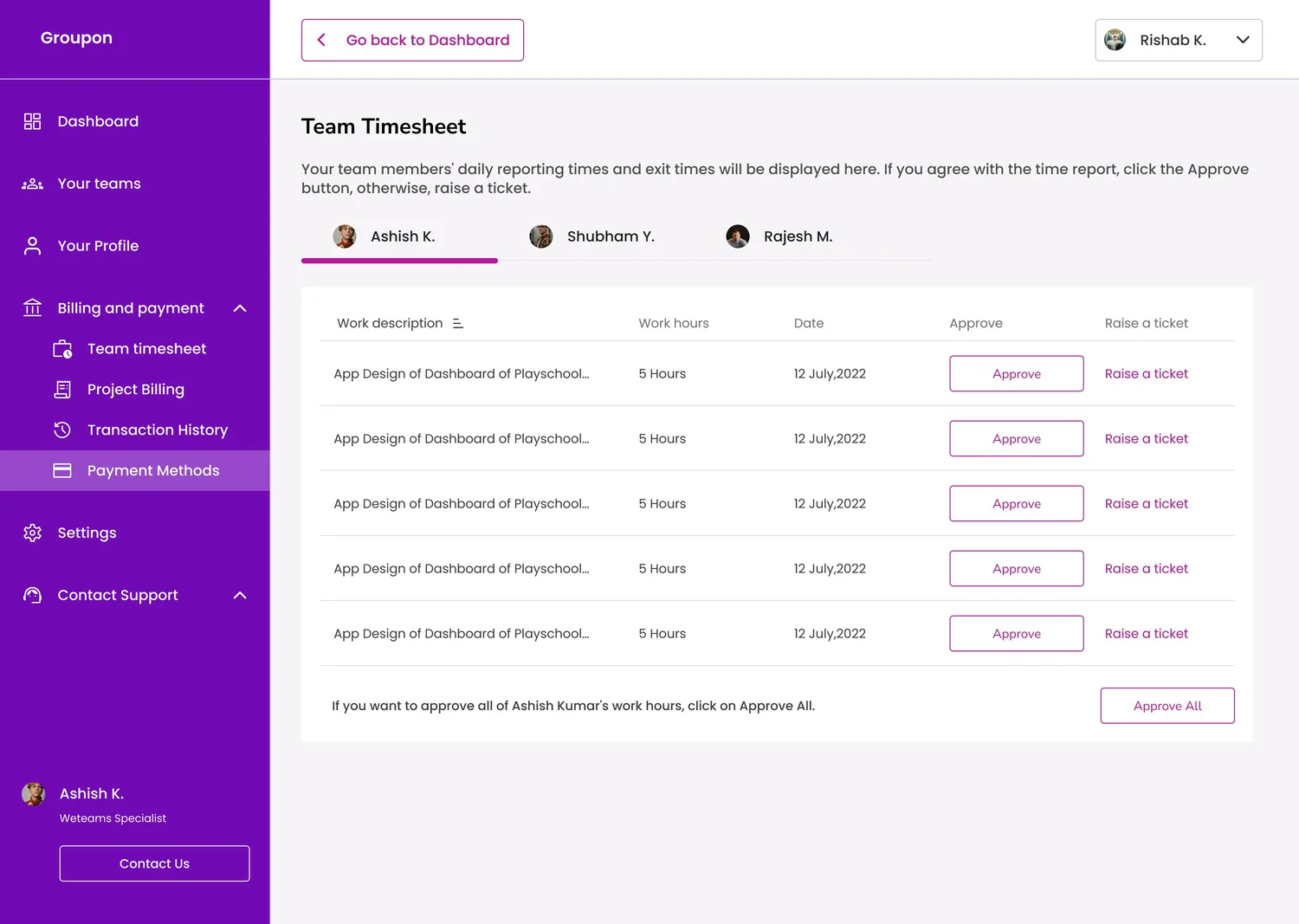
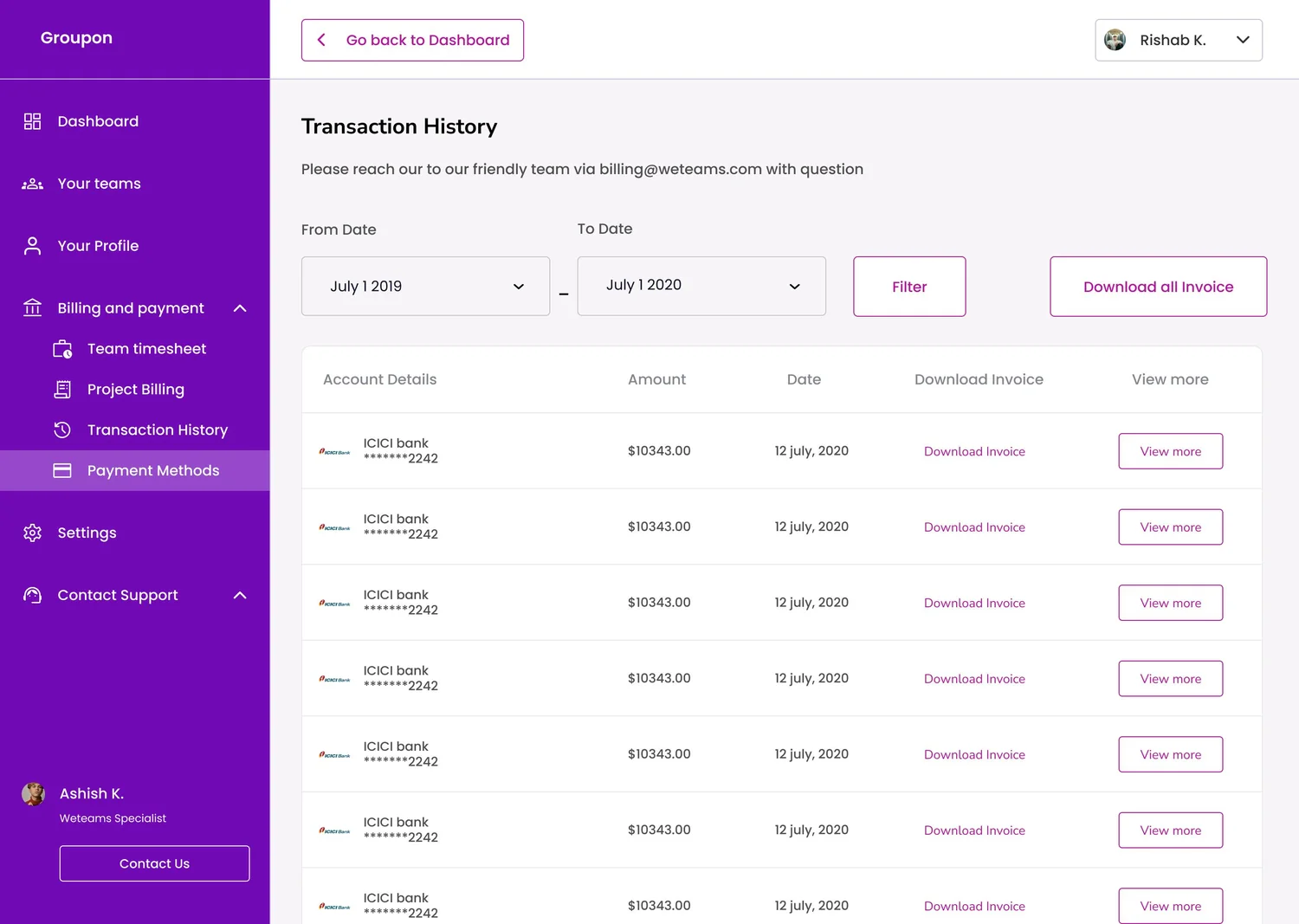
Timesheets feed the invoice
Hours by team and project, flowing into billing rather than being retyped into it.
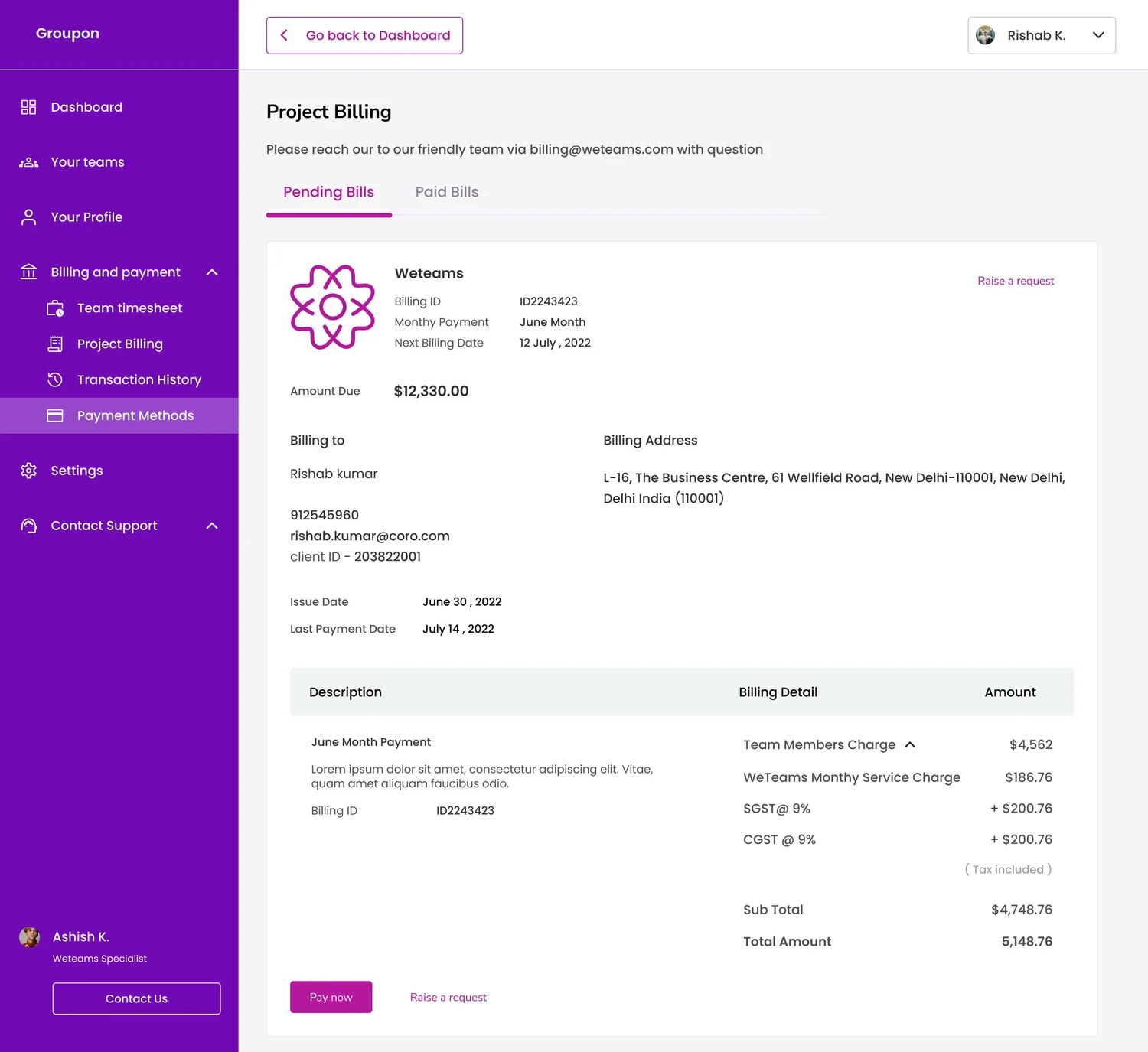
One invoice, many payouts
The part that made the platform worth using rather than merely pleasant: the company pays once, individual payouts are handled underneath, and nobody reconciles anything by hand.
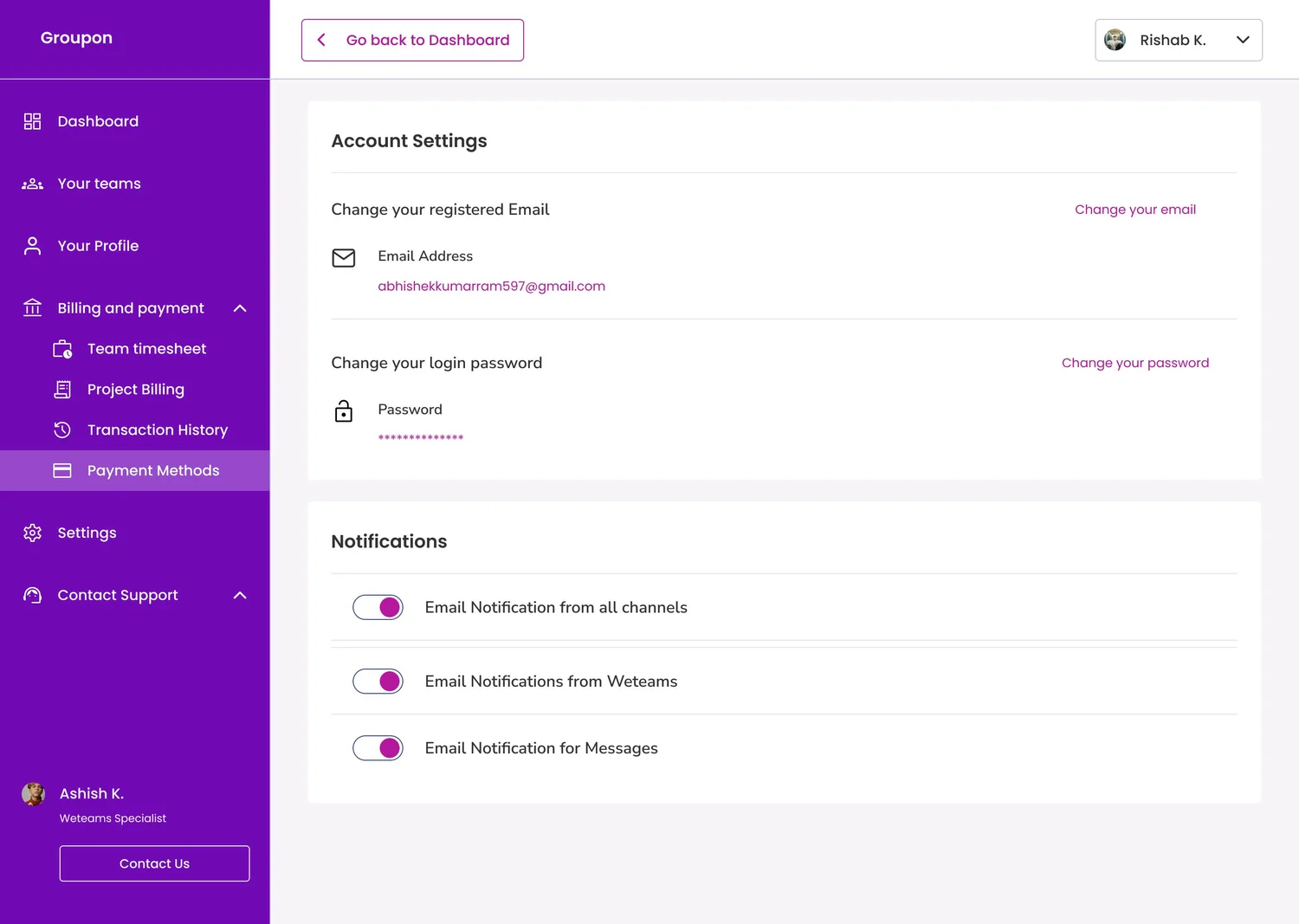
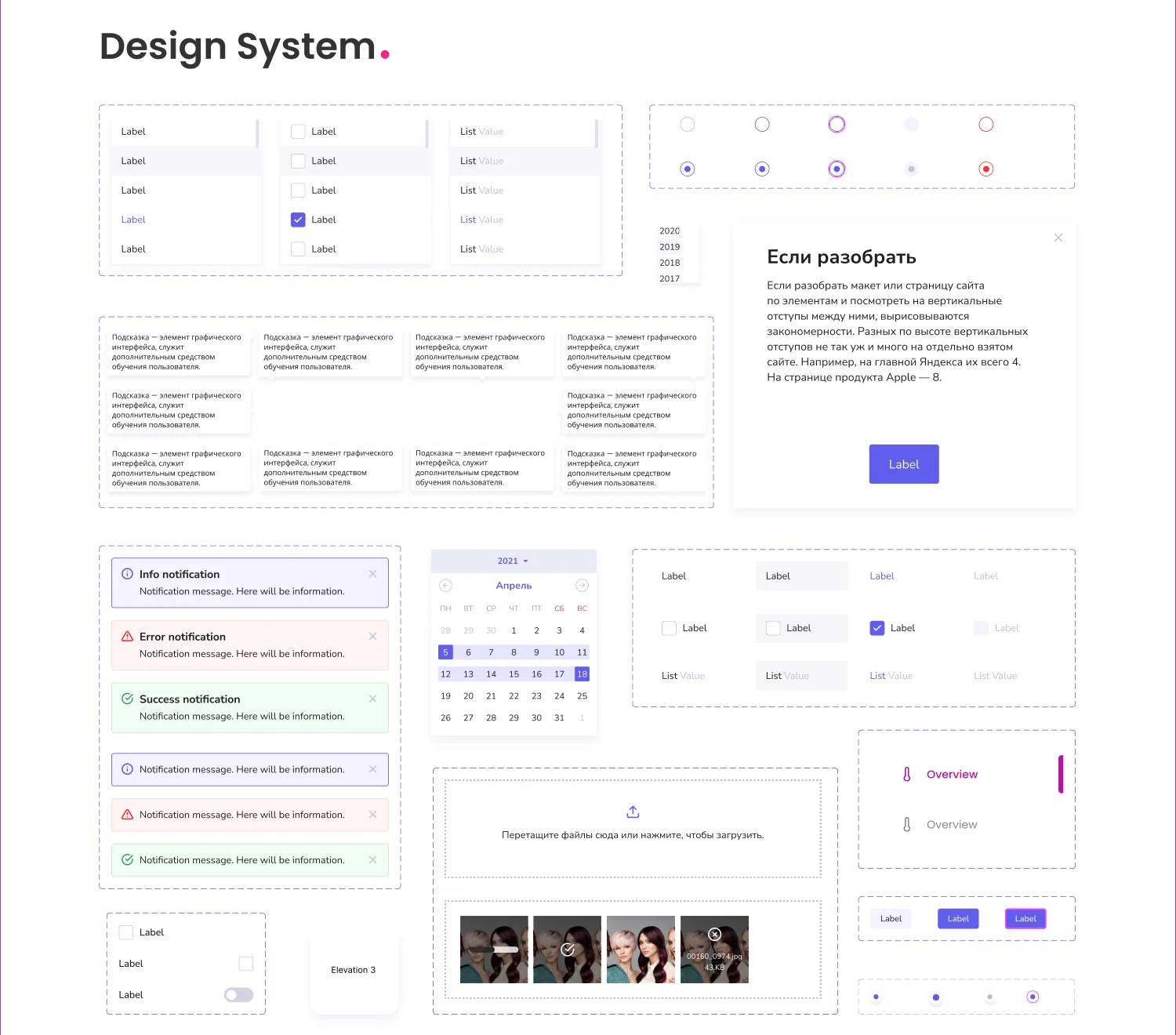
The components underneath all of it
Form fields and their states, notification and alert patterns, buttons, tabs, date pickers, avatars and tables — documented once and reused everywhere. A marketplace ships screens continuously; without this it drifts within a quarter.
The promise, before the product
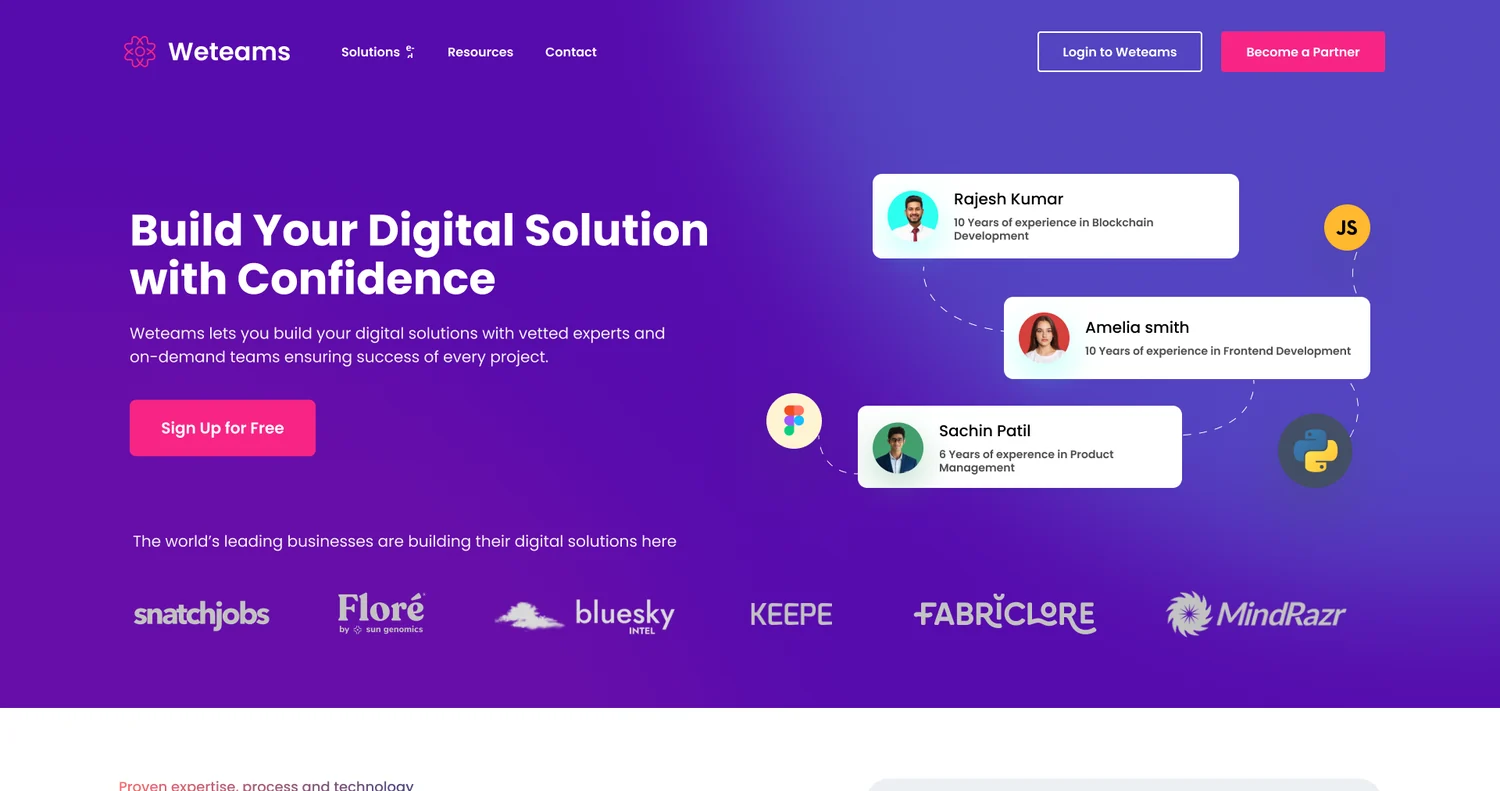
Vetted experts and on-demand teams, with the proof placed immediately underneath — the people you would actually be hiring, named and credentialed.
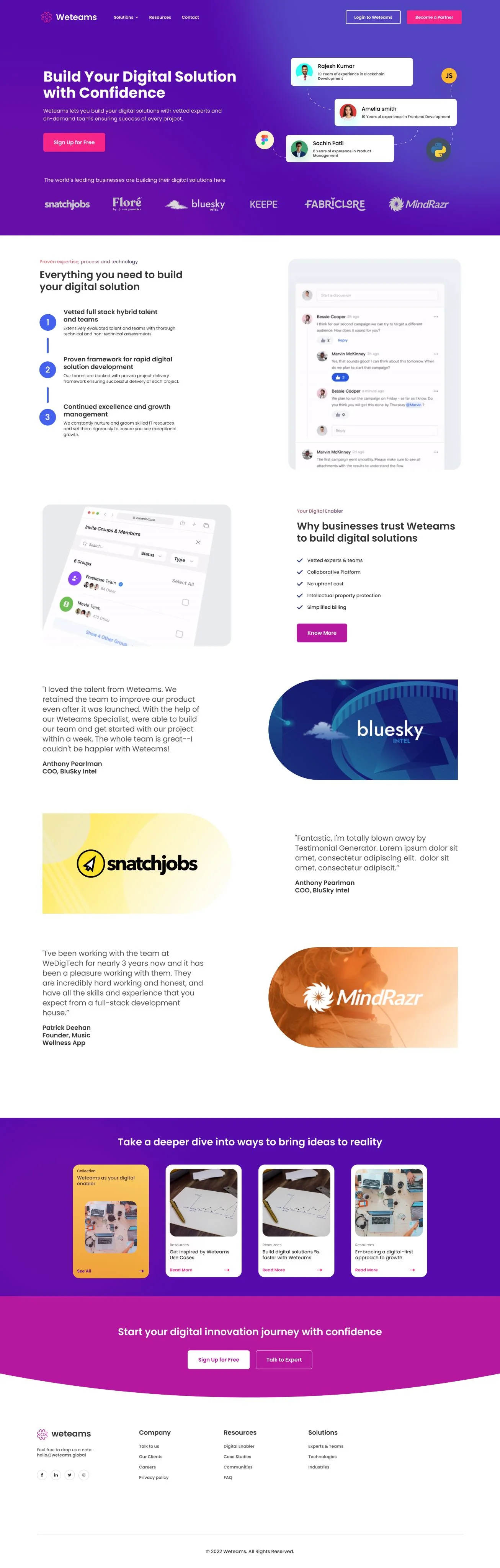
The site and the product, one system
The promise made on the landing page is the product you meet after signing up — same components, same voice, no gap between the pitch and the thing.
Conclusion
A two-sided marketplace where both sides were designed to the same standard, with the financial admin that usually kills multi-team work removed from the critical path.
Weteams can now onboard an expert, assemble a team, run the project and pay everyone without leaving the platform — which was the whole proposition, and was previously five tools.
What it added up to.
Got something that needs building properly?
Fifteen minutes is usually enough for us to tell you something useful about it.