
The plain definition
A design system is the shared vocabulary an interface is assembled from. Not a style guide (which describes), not a UI kit (which supplies shapes) — a system also carries the rules about when to use what, and what every component does in every state.
What a real one contains
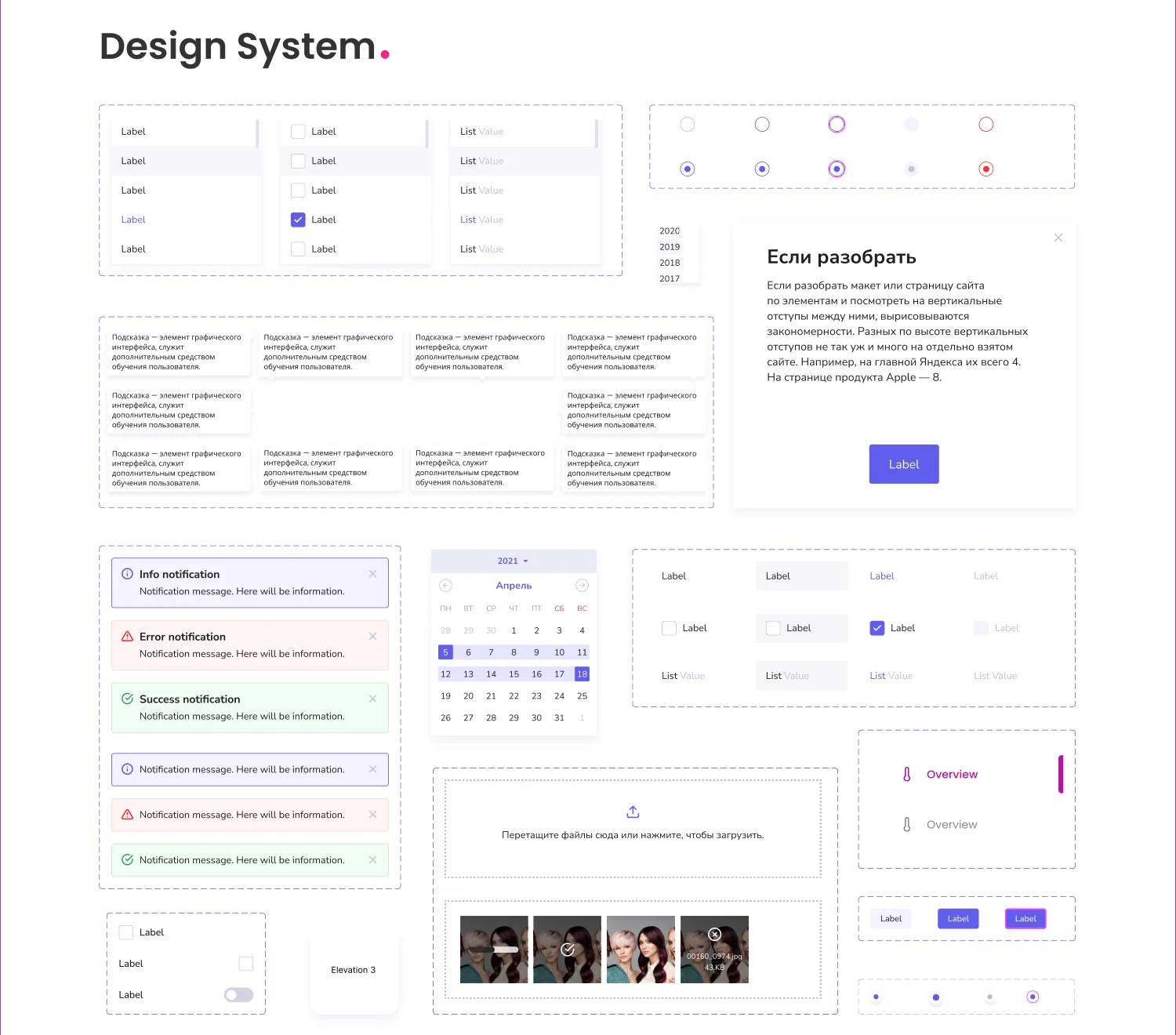
- Tokens. The primitives: colour ramps, a type scale, a spacing scale. Named once, referenced everywhere, so a change propagates instead of being repeated.
- Components. Fields, buttons, tables, modals, notifications — each with its variants documented rather than improvised per screen.
- States. The part teams skip and then rebuild: empty, loading, error, disabled, partially complete, permission denied. A ten-component library can hold sixty states.
- Rules. When to use a modal rather than a page. How errors are worded. What spacing separates a section from a subsection.
An honest test for whether you need one
Answer these four:
- Is more than one person designing or building UI?
- Do you ship new screens more than once a month?
- Has anyone recently asked "which button is the right button here"?
- Would adding a seventh product to your site require a redesign?
Two or more yeses and a system will pay for itself. All noes and you are better off with a tidy component library in Figma and your energy spent on the product.
Why systems drift, and the one habit that prevents it
Systems drift because components get invented on the screen that needs them, under deadline, by whoever is closest. Six months later four pages have four versions of the same card and nobody decided that.
The habit that prevents it is laying the whole surface out on a single board, early. In one view you can see immediately that four pages have invented four versions of the same thing, and settle it once. It is also the artefact that survives the project — anyone joining later can see the entire product at a glance.
What good handoff looks like
If you stop at design and hand to an engineering team, the deliverable that matters is not screens. It is the documented library plus a spacing and margin scale, so the build team has one source of truth and the marketing team can publish a new page without a designer in the loop.
This is the part that decides whether a redesign survives the next two years. Pages age; a system absorbs change.
Comments
Comments are not wired up yet. In the meantime, the conversation happens on LinkedIn — or write to hello@tagthose.in and we will reply.